

A personal liability clause lawsuit asks a court to make a person, not just a company, responsible for a contract debt. In Florida, an LLC often shields owners from company debts. A personal signature can change that. This page explains how these clauses work, how these cases move through Florida courts, and which facts get examined first.
What a Personal Liability Clause Is and Who It Affects
A personal liability clause makes an individual answerable for a company’s contract obligation. The company is not the only one on the hook.
The people most often affected are owners, managing members, officers, and sometimes a spouse or other principal who signs. Lenders and landlords often ask for a personal signature because a newer company may have limited assets or credit history. That shifts risk to the person who signs.
Many owners assume an LLC or corporation blocks every claim. It does not always do that. Florida’s LLC liability statute (§ 605.0304) says a company’s debt is solely the company’s. A member or manager is not personally liable just because of that role.
The phrase to notice is “solely by reason of” being a member or manager. Your own signature is a separate question.
Read every signature block closely. “Jane Doe, Manager” and “Jane Doe, individually” tell a court very different things.
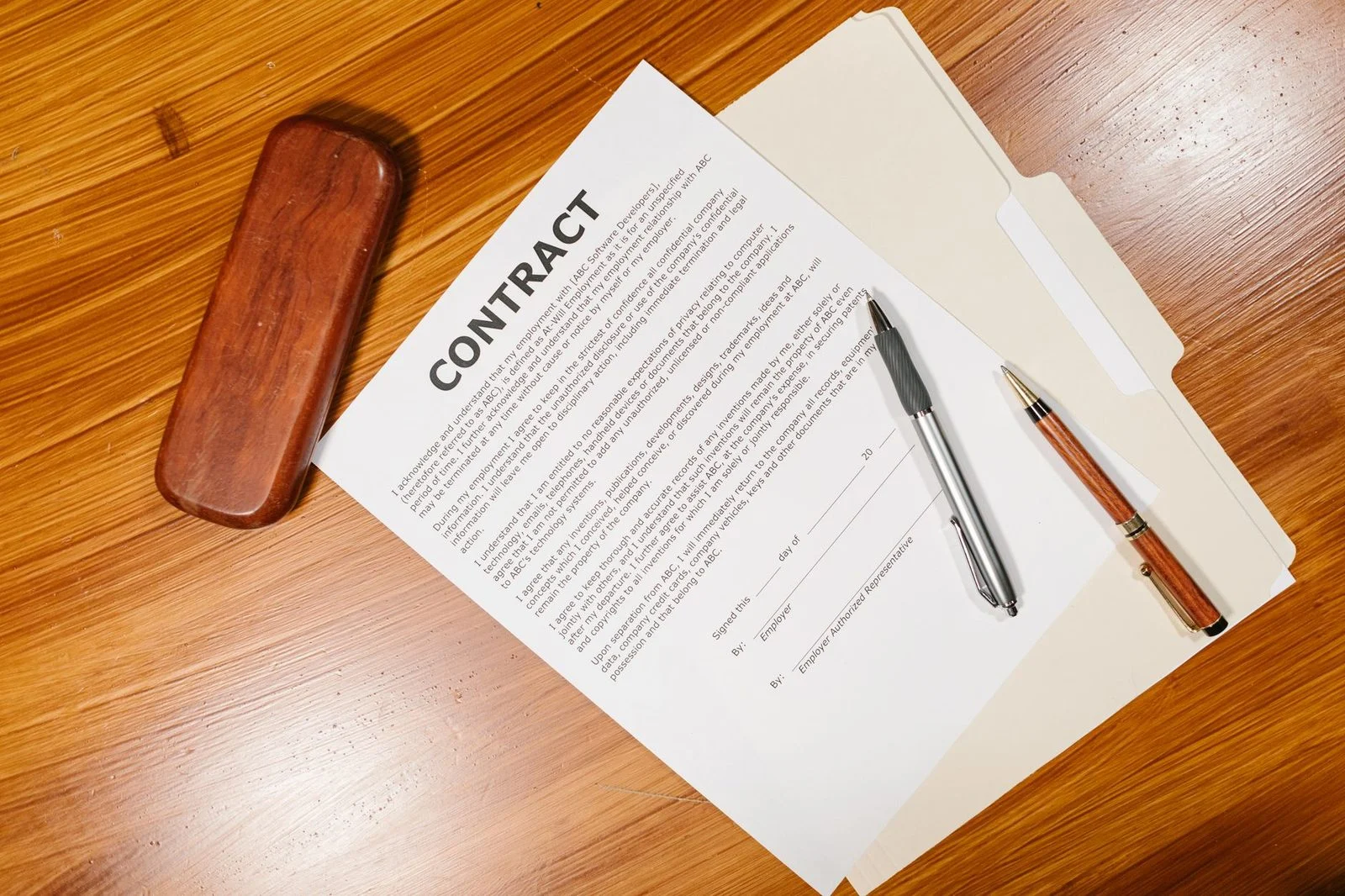
Common Forms: Personal Promises, Signed Indemnities, and Owner Signatures
The most common forms are a personal promise to cover company debt, a signed indemnity, and an owner added as a party.
- Personal promise to cover company debt. This shows up often in leases, equipment financing, supplier credit, and loans. It often sits in a separate form signed with the main papers.
- Signed indemnity. The signer agrees to cover losses the other side suffers. This can shift a loss from the company to the individual.
- Owner joinder. The owner is named as a party, often with “signing as” language.
- Risky drafting. Watch for unlimited amounts, waivers of defenses, and cross-default language, which can tie one contract to another.
Under Florida’s statute of frauds (§ 725.01), a special promise to answer for another person’s debt must be in writing and signed by the party being charged or by some other person by her or him thereunto lawfully authorized. Start by gathering every page you signed, including exhibits and initials.
What a Lawsuit on a Personal Liability Clause Typically Covers
These suits usually seek money from the individual signer for an unpaid company obligation. Lawsuits often name both the company and the individual, so each faces its own claim.
- Breach of the personal promise, when the company does not pay.
- Breach of contract against the signer as an individual.
- Enforcement of an indemnity that shifts a loss to the signer.
If a court finds the claim valid, it can enter a money judgment for the unpaid balance, plus interest. Florida generally follows the rule that each side pays its own attorney’s fees, unless a contract or statute provides otherwise, as stated in Price v. Tyler.
Fee clauses can cut both ways. Under Florida’s attorney fee statute (§ 57.105), if a contract lets a party recover fees for enforcing it, the court may award fees to the other side when that side wins, for contracts entered into on or after October 1, 1988.
After a judgment, a creditor may be able to use it as a lien. Under Florida’s judgment lien statute (§ 55.10), a judgment becomes a lien on real property in a county once a certified copy is recorded there with the lienholder’s address. Under Fla. Stat. § 55.10, a judgment, order, or decree becomes a lien on real property in any county when a certified copy is recorded in the official records or judgment lien record of that county, provided the judgment, order, or decree contains the address of the person who holds the lien or a separate affidavit stating that address is recorded at the same time.
How These Cases Move Through Florida Courts: Steps and Timeline
Most of these cases move from a demand, to a lawsuit, to document exchange, then to settlement, mediation, or trial.
- Demand or summons. A demand letter may come first. A summons means a lawsuit has been filed, and you must respond within the time the court papers set.
- Document review. Each signature, the corporate records, and the payment history get reviewed.
- Early filings. A complaint lays out the claim, and an answer responds to it.
- Mediation or settlement. When a party asks, and the requesting party is willing and able to pay the costs of the mediation or the costs can be equitably divided between the parties, a court must refer any filed civil action for monetary damages to mediation, unless an exception applies. Under Florida’s mediation statute (§ 44.102), a suit filed to collect a debt is one exception.
- Trial, arbitration, or judgment. If the contract requires arbitration, the dispute may go there instead of court.
Under Florida’s limitations statute (§ 95.11), actions other than for recovery of real property must be commenced within the period set for their type; for example, an action on a judgment of a Florida court of record has 20 years. How that clock runs depends on the facts, so check the dates early.
Defenses and Facts That Get Examined
Courts first look at who signed, in what capacity, and what the paperwork actually requires.
- Signature and capacity. Did you sign personally, and where does your name appear?
- Scope and conditions. Check the amount cap, the term, and any notice or cure steps the contract requires before a default.
- Payments and credits. Amounts already paid or credited reduce what is owed.
- Veil piercing. Florida courts pierce a company’s veil only on a showing of improper conduct. The claimant must show the owner dominated the company so it had no independent existence, the corporate form was used fraudulently or improperly, and the claimant was injured, as set out in the Wurtzebach veil-piercing opinion.
- Company separateness. Company accounts, records, and capital that stay separate are facts a court reviews.
A “showing of improper conduct” requires proof that “the corporation was actually organized or used to mislead creditors or to perpetrate a fraud upon them.” Wurtzebach v. Flooring Depot FTL, Inc. It usually appears alongside a contract claim.
Why Work With Ayala Law PA on a Business Contract Dispute
Ayala Law PA focuses on business litigation, commercial litigation, contract disputes, shareholder disputes, construction litigation, real estate litigation, and international trade litigation in Florida courts and arbitration.
Eduardo A. Maura is the responsible attorney for this page. Our team, with its support staff, handles the work on each matter.
The firm’s only office is in Tampa, at 1646 W Snow Ave. The firm serves businesses and owners in Tampa, Hillsborough County, Brandon, Riverview, Plant City, Temple Terrace, and the wider Tampa Bay area. Some matters may be referred to another lawyer or firm where that fits the case. Fee and cost terms are explained when we discuss your matter.
If a personal liability clause lawsuit or demand letter has reached you or your company, you do not have to sort it out alone. Call (305) 570-2208 or request a case evaluation to talk through the facts with our team.

Frequently Asked Questions
Does an LLC protect me from a personal promise I signed?
The LLC shield covers company debts. A promise you signed in your own name can still make you answerable.
Can a creditor reach my personal assets for company debts?
Sometimes. Florida courts pierce the company’s veil only on proof of improper conduct, such as using the company to mislead creditors.
Does a personal liability clause always make me liable?
No. Liability turns on the exact wording, how you signed, and the facts of the case.
What should I do if I was served with a lawsuit that names me?
Read the papers right away and note the response deadline. Acting early keeps more options open.
Can I be personally liable for a lease my company signed?
Possibly, if you signed a personal promise or your name appears in the lease in your own capacity.
How long do these claims last?
Florida law generally gives five years to sue on a written contract. The facts control how that period applies.
What should I gather before I call?
Gather every contract, signature page, payment record, and related email or letter.



