
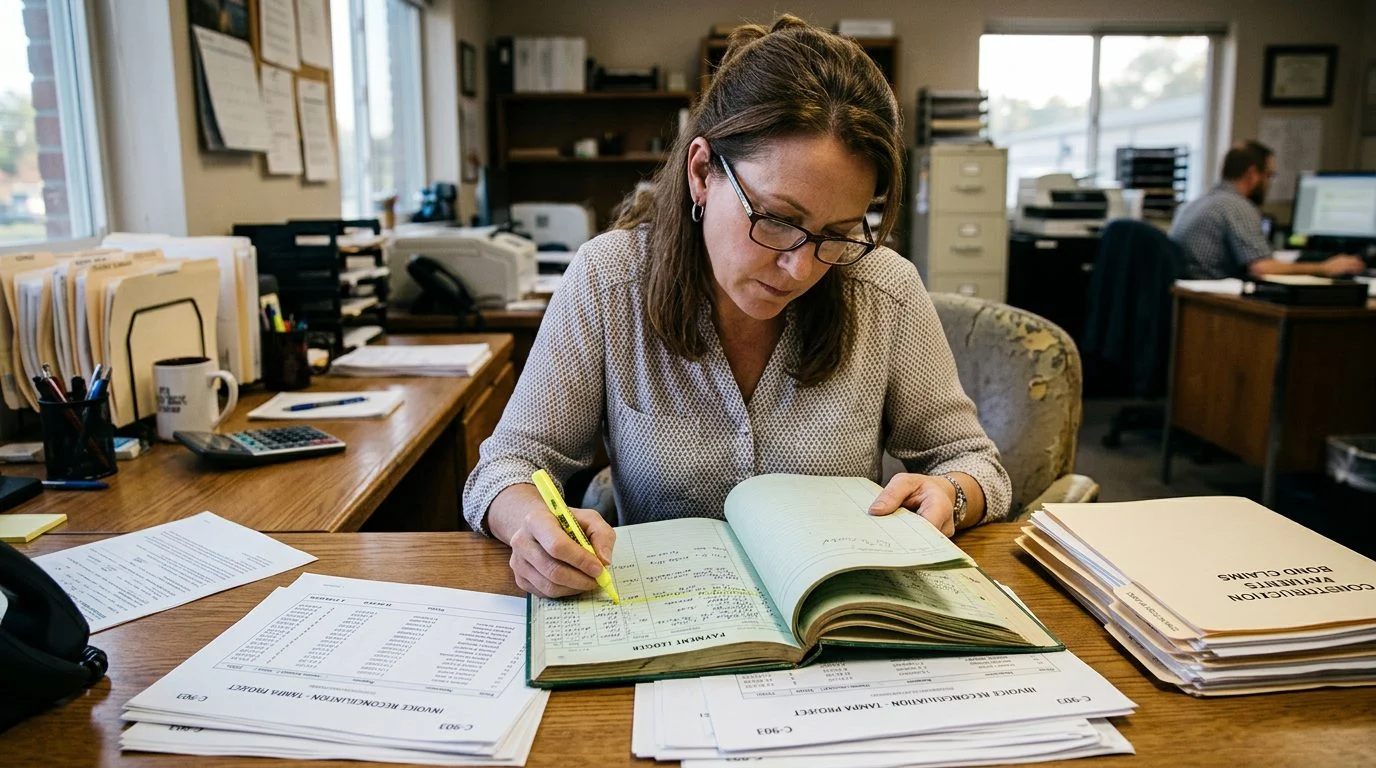
If you’re unpaid on a construction job, or you’re helping a company that is, cost is probably your first question. This guide explains what moves the cost of a payment bond claim and what to check before you agree to anything.
How much does a Tampa attorney typically charge to pursue a payment bond claim on a construction project?
There is no single price for this work. A Tampa attorney’s charge is set in a written fee agreement, and the structure, whether hourly or a phased flat fee, depends on the claim and how far it goes. No single figure fits every payment bond claim, because the cost depends on the facts. Before you engage our firm, we explain our fee structure and any costs you may owe, in writing.
In Florida, each side generally pays its own lawyer unless a contract or statute provides otherwise, as the Florida Supreme Court explained in Price v. Tyler. That makes the fee terms in your contract worth reading closely.
If an unpaid balance has you weighing a bond claim, you don't have to sort out the costs and deadlines alone; call Ayala Law PA at (305) 570-2208. Talk it through with our team — we can walk you through how a situation like yours is usually handled and what your options are.
What factors change the cost of a payment bond claim in Florida?
Four things move the cost most: the type of project, the amount in dispute, the stage of the case, and the number of parties. Each one changes how much work the claim takes.
- Amount and paperwork. One unpaid invoice takes less work than a set of pay applications, change orders, and retainage.
- Stage. A demand letter costs less than mediation, contested litigation, or a suit on the bond.
- Parties. The general contractor, the surety, the owner, and lower-tier subcontractors or suppliers each add messages and documents to review.
If the surety or another party disputes the amount or whether the claim was timely, expect more work.
What costs besides attorney time can a client owe on a bond claim?
Beyond attorney time, a client may owe court filing fees, service of process fees, and deposition and transcript costs. Fees for a technical witness, and mediator fees, may also apply. These costs are separate from the fee, and you may owe some even if the claim settles early.
Florida law can send some damages cases to mediation. A court must, upon request of one party, refer a filed civil action for monetary damages to mediation if that party is willing and able to pay the costs or the costs can be equitably divided, unless the action falls within a listed exception, such as a landlord and tenant dispute that does not include a personal injury claim, an action to collect a debt, a medical malpractice claim, or a case governed by the Florida Small Claims Rules. Actions filed to collect a debt are among the exceptions, under Florida Statute 44.102.
Ask for a written list of anticipated costs before you engage a lawyer.
How do notice and filing deadlines affect what a bond claim costs?
Deadlines can change both the cost and your options, so check them early. For many payment bond claims on a contractor’s or subcontractor’s bond, Florida Statute 95.11 sets a one-year period to enforce the claim. That period runs from the last furnishing of labor, services, or materials, or from the contractor’s last furnishing if the contractor is the principal on a bond on the same construction project, whichever is later, and the statute has exceptions.
Florida also states that a cause of action accrues when its last element occurs, as set out in Florida Statute 95.031. Private-project lien and bond deadlines under Chapter 713 are strict too. Check them against your actual project dates.
Missed deadlines can bar a claim or add work, so timing affects both cost and options. Gather the contract, bond form, pay applications, change orders, and delivery records now. These papers set the timeline.
How should you read a payment bond claim fee proposal?
Start with scope. Check which steps are covered, such as notice, demand, negotiation, suit, and appeal, and which are left out.
Florida lawyers must charge a reasonable fee. Under Florida Bar Rule 4-1.5, a fee is clearly excessive when a lawyer of ordinary prudence would be left with a definite and firm conviction that it exceeds a reasonable fee to such a degree as to constitute clear overreaching. General overhead belongs in the fee itself, though a client and lawyer may agree on a reasonable charge for certain in-house services.
Then look at the mechanics:
- How updates, retainers, and cost pass-throughs are billed.
- What triggers extra charges.
- Whether the fee can change if the surety contests the claim.
Compare the proposal to the claim’s stage and deadlines, not just the lowest number on the page.
Quick answers
Is there one price for a payment bond claim?
No. The fee is set in a written agreement after the facts are reviewed.
Do I pay my own lawyer in Florida?
Usually yes, unless a contract or statute provides otherwise.

Talking through an unpaid construction claim with Ayala Law PA
Ayala Law PA focuses on business litigation, including construction litigation involving contractor and subcontractor disputes, lien foreclosure, and construction contract disputes. Eduardo A. Maura is the responsible lawyer for this page. Our bona fide office is at 1646 W Snow Ave, Tampa, Florida, and we serve businesses in Tampa, Hillsborough County, and the Tampa Bay area from that office. More on our construction litigation work is available.
If an unpaid balance has you weighing a bond claim, a deadline may already be running. You don’t have to sort out the costs and timeline alone. Call (305) 570-2208 or use our contact page to talk through your project and how fees are structured.



