
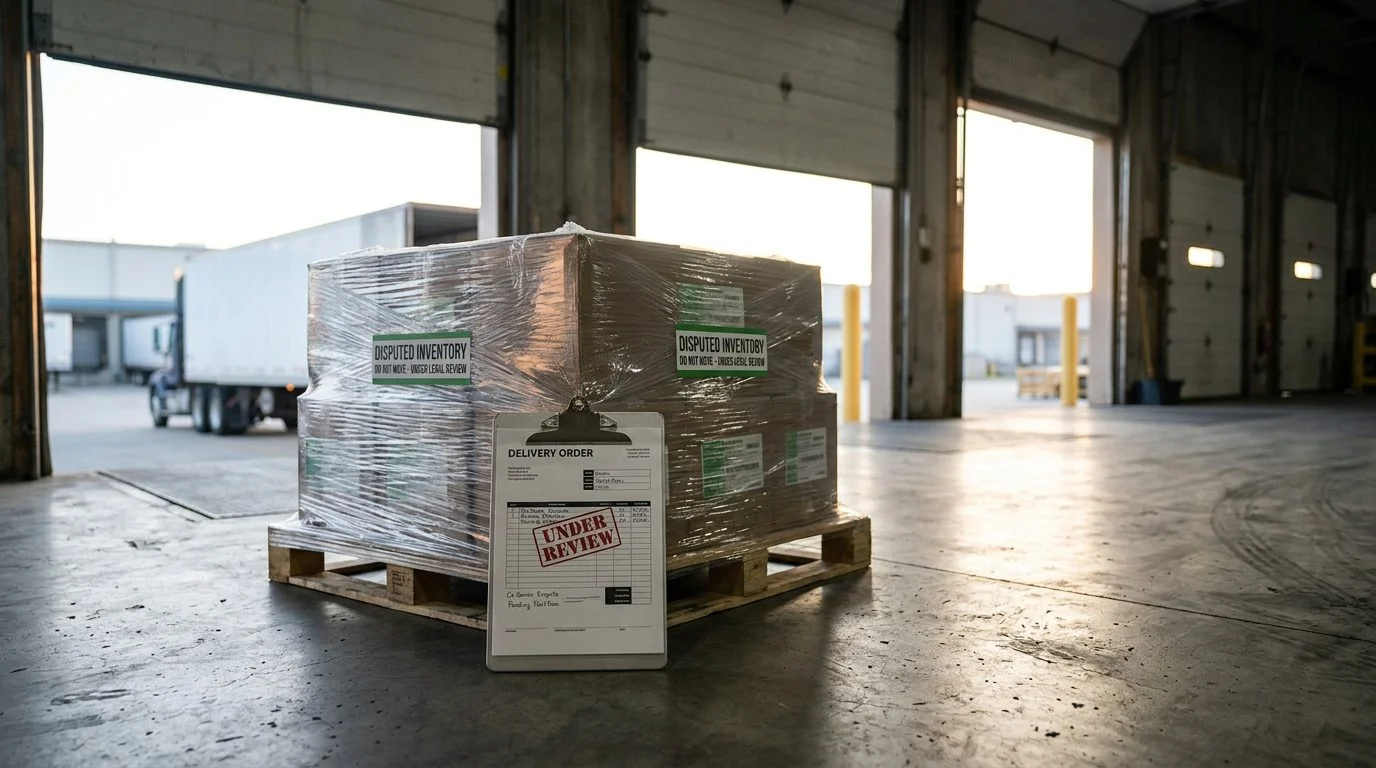
When co-owners of commercial property disagree, the property can sit unsold, unleased, and unpaid for months. Co-owners who cannot agree on how shared property should be handled often find that the available options depend on the facts of their situation, and a conversation with counsel can help clarify them. Co-owned commercial property partition Florida disputes can stall a sale, a lease, or a loan. This page explains how each claim works, what to review first, and what decisions come before any filing. It is general information, not advice about your specific property.
Not sure what your next step is?
Talk it through with our team — we can walk you through how a situation like yours is usually handled and what your options are.
What Co-Owned Commercial Property Means in Florida
Co-owned commercial property is real estate that two or more people or entities hold together. Co-owners are often business partners, family members, or investors who bought in jointly.
Your rights depend on the deed, any written agreement among the owners, and how the property has actually been run. The deed comes first. Florida law requires a real estate interest of this kind to be created or transferred in a signed writing, witnessed as the statute requires, Fla. Stat. § 689.01. If the owners hold the property through an LLC or partnership, the company’s documents may control much of the relationship.
What Partition and Buyout Litigation Covers
A partition action is a lawsuit that asks a court to divide co-owned property or order it sold and the proceeds split. Related claims often arise in the same dispute.
- Partition actions ask the court to divide the property or order a sale.
- Buyout claims seek a purchase of a co-owner’s share at a price set by agreement or valuation.
- Accounting claims track rents collected, expenses paid, and one owner’s extra contributions.
- Defense of a partition challenges the valuation, the requested remedy, and how liens and mortgages are handled.
- Carrying-cost disputes involve a co-owner who stops paying taxes, insurance, or maintenance, or who blocks a sale or lease.
In a partnership, a departing partner’s buyout follows Fla. Stat. § 620.8701. If no agreement is reached within 120 days after a written demand, the partnership must pay the amount it estimates to be the buyout price, less offsets. For an LLC, the operating agreement governs relations among the members under Fla. Stat. § 605.0105.
What Usually Triggers a Co-Ownership Dispute
Most co-ownership fights start with money or control, not a courtroom. A disagreement over one decision often becomes a lawsuit when the owners cannot resolve it.
Common triggers include:
- A deadlock over selling, refinancing, leasing, or improving the property.
- A co-owner who stops paying taxes, insurance, or repairs while still using the space.
- A co-owner who collects rent or other income and does not share it.
- The death of an owner.
When an owner dies, that share usually passes under the will or the estate rules. The heirs or the estate may then hold a new co-ownership interest. The details depend on the will, the deed, and the estate’s status, so review them before acting.
Have questions about what happened?
Ask our team directly. Tell us what you are dealing with and we will explain how the process works from here.
How a Partition Case Typically Proceeds
A co-owned commercial property partition Florida case usually moves through document review, negotiation, a court filing, and then a division, buyout, or sale. Each step can change the next one.
- Review the paperwork. Pull the deed, title record, mortgages, liens, and any operating or co-ownership agreement.
- Try to negotiate. Send a written demand for a buyout, or propose an accounting and a listing agreement.
- File in the right county. Florida partition actions are governed by Chapter 64, which requires that the action be brought in the county where the property lies under Fla. Stat. § 64.022. For Tampa-area property, that is often the county where the property sits, such as Hillsborough County.
- Serve the parties and lienholders. Discovery then covers value, income, and expenses under the Florida Rules of Civil Procedure, which govern court procedure in Florida.
- Value and resolve. The case may end in a division, a buyout, or a sale. Under Fla. Stat. § 44.102, a court must, on one party’s request, refer many filed civil actions for money damages to mediation, subject to listed exceptions.
- Close and distribute. After liens and costs are paid, the proceeds are distributed.
Timing depends on the number of parties, the complexity of the title, and court schedules. No outcome can be predicted in advance.
Options to Weigh Before Filing
Filing is one option, and it is not always the first one. A written deal or a structured offer can narrow the dispute.
- Negotiated buyout or sale with an agreed valuation, a payment schedule, and security for payment.
- Written settlement offers. Offers of judgment and settlement are now governed by Fla. Stat. § 768.79 and Fla. R. Civ. P. 1.442, and whether offer-of-settlement sanctions apply to an equitable partition claim is not settled. Under Fla. Stat. § 768.79(4) and Fla. R. Civ. P. 1.442(f), a proposal for settlement must be accepted within 30 days after service unless it is withdrawn sooner. Whether turning down an offer exposes a co-owner to fee sanctions may depend on the relief sought, because section 768.79 of the Florida Statutes addresses civil actions for damages and Florida courts have limited its reach where the relief requested is non-monetary.
- A written accounting that settles rent, expense, and improvement disputes first.
Deadlines matter too. Under Fla. Stat. § 95.031, a cause of action accrues when its last element occurs, so timing depends on the facts. Under Fla. Stat. § 95.051, the pendency of an arbitral proceeding about the dispute tolls the running of the limitations period.
Title needs checking, too. Under Fla. Stat. § 55.10, a judgment becomes a lien on real property in a county once a certified copy is recorded there with the lienholder’s address. Check the record before making any buyout offer.
Why Ayala Law for Co-Owned Commercial Property Disputes
Ayala Law PA focuses on business litigation, including commercial and contract disputes, shareholder and partnership disputes, construction and real estate litigation, and international trade disputes in Florida courts and arbitration. Eduardo A. Maura is the attorney responsible for this page. The firm’s support staff assist with case administration.
Our team reviews the deed, the title, and any agreements first. We then lay out written options and realistic timelines, so you can weigh a buyout, a settlement offer, or a filing.
The firm’s only office is at 1646 W Snow Ave in Tampa. Clients in Tampa, Hillsborough County, Brandon, Riverview, Plant City, Temple Terrace, and across the Tampa Bay area are served from that Tampa office. The firm does not have a Tampa location.
Fees and costs are explained when a case is evaluated.
Frequently Asked Questions
Can one co-owner force a sale?
The court decides the remedy based on the facts and the record.
Which county hears a partition case for Tampa-area property?
For partition, the county where the land lies is the proper venue under Fla. Stat. § 64.022. For Tampa-area property, that is often Hillsborough County.
What happens if one owner dies?
The deceased owner’s share usually passes under the will or estate rules. The heirs or the estate may become new co-owners.
Do I need to act quickly?
Deadlines may apply. Under Fla. Stat. § 95.031, timing depends on when the last element of a claim occurs, so review deadlines early.

Want to know where you stand?
Tell us about your situation and our team will walk you through the options available to you.
Talk Through Your Co-Ownership Situation With Ayala Law
If a co-owner has stopped paying, blocked a sale, or filed a case you did not expect, you have a lot to sort out. You don’t have to review the title, the agreements, and the options alone. Call (305) 570-2208 or contact Ayala Law to schedule a case evaluation about your property.



