

In Florida, most commercial claims other than actions to recover real property must be filed within a set number of years. Section 95.11 sets different filing deadlines depending on the kind of action, and the deadline for a given claim depends on which category it falls into. Here is how these deadlines work and what to do now.
How Long Do You Have to File a Commercial Property Lawsuit in Florida?
Florida’s main limitations statute, Fla. Stat. § 95.11, sets filing deadlines for many civil claims. That includes claims that grow out of commercial contracts and property deals.
There is no single deadline for a whole deal. Each claim type has its own period. One sale or lease can produce a contract claim, a fraud claim and a claim about the property’s ownership. Each can have a different clock.
Missing a deadline can bar the claim completely. Review the timing soon after a problem appears, not after months of waiting.
Once a case is filed in Florida circuit court, the Florida Rules of Civil Procedure govern pleadings and the steps that follow. For the broader framework, read our parent guide on commercial real estate litigation in Florida.
If a closing, lease or sale has gone wrong, you may have a claim with a filing deadline attached. Reach out to Ayala Law to talk through your timeline. Talk it through with our team — we can walk you through how a situation like yours is usually handled and what your options are.
Which Time Limit Applies to Your Claim?
Contract claims not founded on a written instrument fall under a four-year period in Fla. Stat. § 95.11. Oral or unwritten contract claims generally have four years under the same statute.
Fraud claims tied to a property deal work differently. For fraud claims, Florida law requires the action to be filed within the period in § 95.11(3), which runs from the time the facts giving rise to the claim were discovered or should have been discovered with the exercise of due diligence.
Claims about building work follow their own rule. For hidden defects, the period under § 95.11(3)(b) runs from the time the defect was discovered or should have been discovered with the exercise of due diligence. Under Fla. Stat. § 95.11, an action founded on the design, planning, or construction of an improvement to real property must be commenced within four years, with the time running from the date the authority having jurisdiction issues a temporary certificate of occupancy, a certificate of occupancy, or a certificate of completion, or the date of abandonment of construction if not completed, whichever date is earliest; when the action involves a latent defect, the time runs from when the defect is discovered or should have been discovered with the exercise of due diligence, but in any event the action must be commenced within 7 years after that earliest date, although counterclaims, cross-claims, and third-party claims arising out of the conduct, transaction, or occurrence set out or attempted to be set out in a pleading may be commenced up to 1 year after the pleading to which they relate is served, even if they would otherwise be time barred.
Florida’s “7-year” question can mean two different things. Section 95.11 uses seven years as an outer limit for certain construction claims. Separately, Fla. Stat. § 95.12 bars a real property recovery claim unless the person seeking recovery, or the person’s ancestor, predecessor, or grantor, was seized or possessed of the property within 7 years before the action began.
Picking the right legal theory matters. Each theory can carry its own clock.
When the Filing Clock Starts
A claim generally starts to run when its last required element occurs, under Fla. Stat. § 95.031. For most breach claims, the cause of action accrues when its last element occurs. Examples include a missed closing date, a required disclosure never delivered, or a lease default left unfixed.
Fraud claims follow the discovery rule described above, but must be begun within 12 years after the fraud was committed, regardless of when it was or should have been discovered. Ongoing relationships can create more than one trigger. A lease that goes unhonored month after month can involve separate breaches, each with its own date.
Some events pause the clock. Under Fla. Stat. § 95.051, the period is tolled while an arbitration about the same dispute is pending. Paying part of the principal or interest on a written obligation also tolls it.
The start date depends on the facts of the deal, the documents signed, and when the problem surfaced.
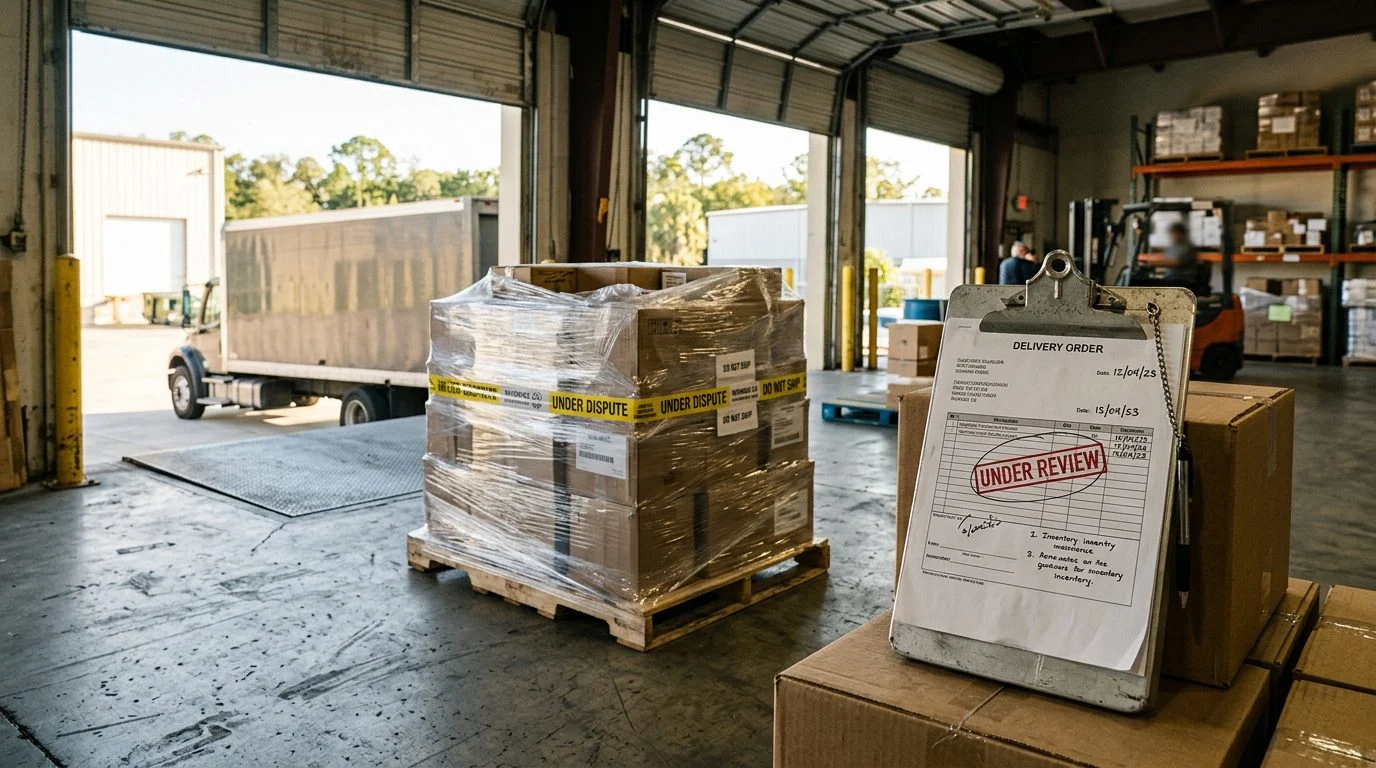
Common Commercial Property Disputes That Carry Filing Deadlines
Several common disputes in commercial property raise timing questions.
Misrepresentation in a sale or purchase. Statements about a property’s condition, zoning, environmental status or income can support fraud or contract claims. The fraud timing rule above applies. Our parent guide covers the broader framework.
Commercial landlord and tenant disputes. Part I of Chapter 83 applies to nonresidential tenancies and to all tenancies not governed by Part II, under Fla. Stat. § 83.001. If a tenant refuses to leave at the end of the lease, Fla. Stat. § 83.06 lets the landlord demand double the monthly rent. Lockouts and security deposit disputes are separate topics we cover on their own pages.
Security deposit disputes. Start with what the lease says about the deposit and how it must be returned.
Ownership and title disputes. A quiet title action asks a court to settle who owns recorded property. Under Florida law, an action on an oral or unwritten contract, including a sale of goods, must be brought within four years (Section 95.11(3)(j)).
Unjust enrichment. A written contract that covers the same subject generally blocks an unjust enrichment claim about that relationship. Williams v. Johnson states this rule for Florida courts.
Steps to Take Now If a Deadline May Be Approaching
Start by gathering your documents and writing a dated timeline. Those two steps show when the clock may have started.
- Gather the paperwork. Collect the agreement, amendments, closing statements, disclosures, notices and written messages with the other side.
- Write a timeline. Note when the problem first appeared, when you found it, and what each side did next.
- Check the contract. Look for notice requirements, cure periods or mediation steps. A clause that shortens the time to sue is void, under Fla. Stat. § 95.03.
- Keep originals intact. Don’t edit, mark up or reorder signed documents.
Talk With Ayala Law About Your Filing Deadline
If a closing, lease or sale has gone wrong, a filing deadline may be closer than you think. Maybe the closing went sideways. Maybe the landlord quit honoring the lease. Maybe you learned after the sale about a problem the seller never disclosed.
Ayala Law PA focuses on business litigation, commercial and contract disputes, shareholder disputes, construction litigation and real estate litigation. Eduardo A. Maura is the responsible lawyer for this page. The firm’s only office is at 1646 W Snow Ave, Tampa, FL. It serves businesses in Tampa, Hillsborough County and the Tampa Bay area.
Call (305) 570-2208 or use the contact form to talk through your timeline. Fees are discussed with the firm when you reach out.
Quick Answers
How long do I have to sue over a commercial lease in Florida? The answer depends on the type of claim involved, and Fla. Stat. § 95.11 sets different time limits for different kinds of actions.
Fraud claims are listed in § 95.11 as legal or equitable actions founded on fraud. They run from when the facts were discovered or should have been discovered with due diligence, but never later than 12 years after the fraud, under § 95.031.



