
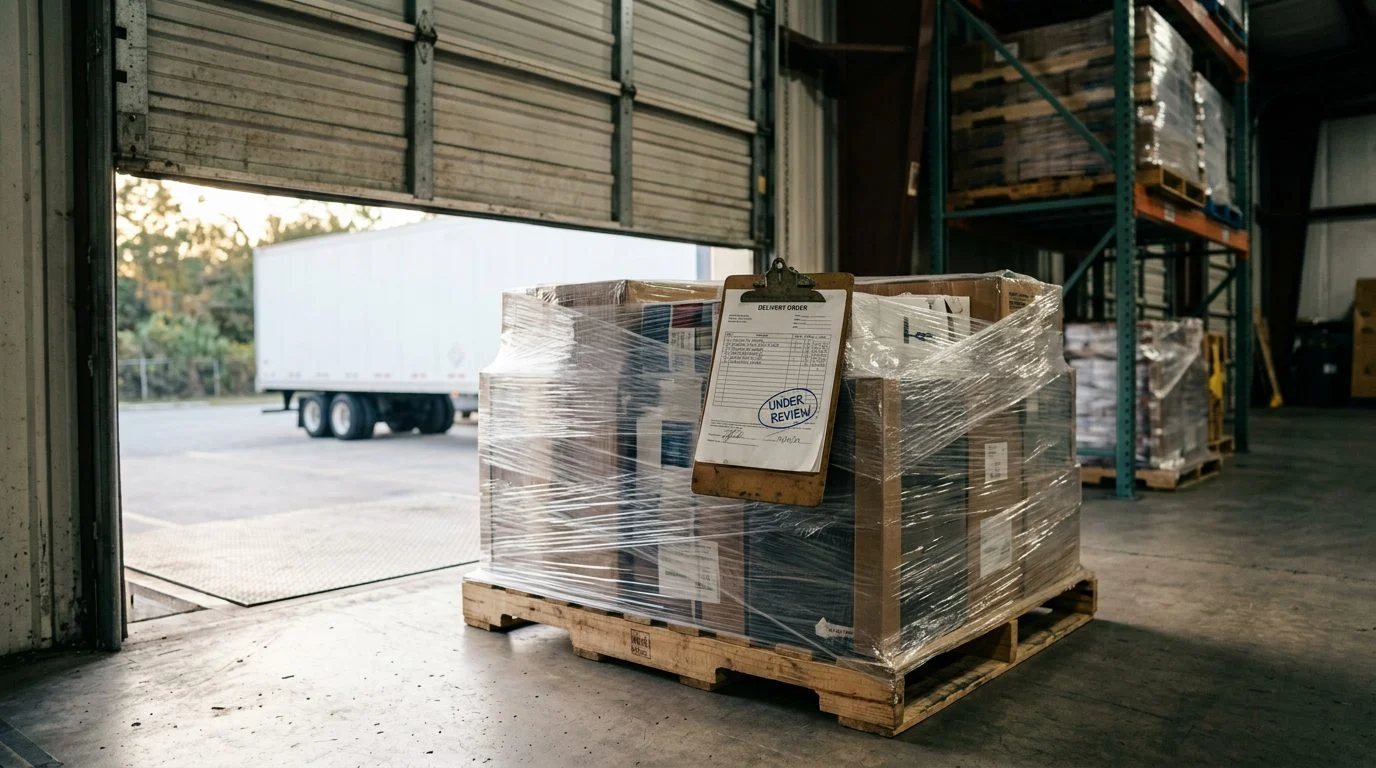
What are some examples of commercial disputes? Common ones include contract fights, disagreements between co-owners, construction payment and lien claims, commercial lease and property fights, business fraud claims, and cross-border trade disagreements. Each one turns on documents, deadlines, and the forum named in the agreement. This page walks through each example and the Florida setting where it may be heard.
What Counts as a Commercial Dispute?
A commercial dispute is a disagreement that arises from business activity. It usually involves money, property, contract terms, or the way a business is owned and run. The dispute can be between two companies, or between a business and an individual or another company.
No single rule defines the category. The label comes from the facts: who the parties are, what they agreed to, and what they’re fighting over.
Where the case goes depends on the agreement. Florida law treats a written agreement to arbitrate as valid and enforceable except on grounds that exist to revoke any contract. A court decides whether that agreement exists.
Not sure what your next step is?
Talk it through with our team — we can walk you through how a situation like yours is usually handled and what your options are.
What Is Commercial Litigation?
Commercial litigation is the court or arbitration process used to resolve a business dispute that the parties can’t settle themselves. It moves in stages, and each stage has its own paperwork.
First, one side sends a demand or notice. Next, written pleadings lay out each side’s claims and defenses. Then comes discovery, where each side asks for documents and sworn testimony. The case ends with a settlement, a ruling from a judge, or an arbitration award.
Most of the evidence is business paper. That includes written agreements, invoices, payment history, emails, text messages, and company records. The National Center for State Courts notes that commercial and civil litigation involves costs, delays, complexity, and unpredictability, and that alternatives to litigation are available.
For a broader look at this area, read the commercial property disputes overview.
Breach of Contract Disputes
A breach of contract dispute starts when one party says the other didn’t do what the contract required. The most common version is a payment or delivery dispute. A supplier says a buyer never paid an invoice. A distributor says a shipment arrived late or didn’t meet the written specifications.
These cases turn on the contract language, the parties’ performance records, and any notice or cure periods the agreement requires. Florida’s sales rules add detail when goods are involved. A buyer that accepts goods must notify the seller of a breach within a reasonable time after it discovers or should have discovered the problem, or it will be barred from any remedy. The buyer also carries the burden to prove any breach in goods it accepted.
A seller may pursue payment for goods the buyer accepted but didn’t pay for. Sellers’ promises about the goods can also matter. A statement of fact or promise about the goods that becomes part of the deal can create an express warranty. A mere opinion or praise usually does not.
Whether a claim succeeds depends on the facts and the wording of the agreement.
Shareholder and Partnership Disputes
Shareholder and partnership disputes are fights between owners. Common examples include disagreements over profit distributions, management decisions, access to company records, buyout terms, and whether one owner breached a duty to the business.
These disputes often turn on the operating agreement, shareholder agreement, or partnership agreement. Those documents often set the rules for how disagreements get handled. Florida law adds its own rules on access to company records and on the duties owners owe. A partner may also sue to enforce rights under the partnership agreement.
Owners also owe duties to the company. A member may also maintain a derivative action to enforce a right of the company, but only after first making a demand on the managers or other members and they do not act within a reasonable time, not to exceed 90 days, unless that demand would be futile or cause irreparable injury.
Deadlock is a common flashpoint. Co-owners can get stuck when they can’t agree and can’t break the tie. In some deadlock situations, a shareholder may ask a court to dissolve the corporation.
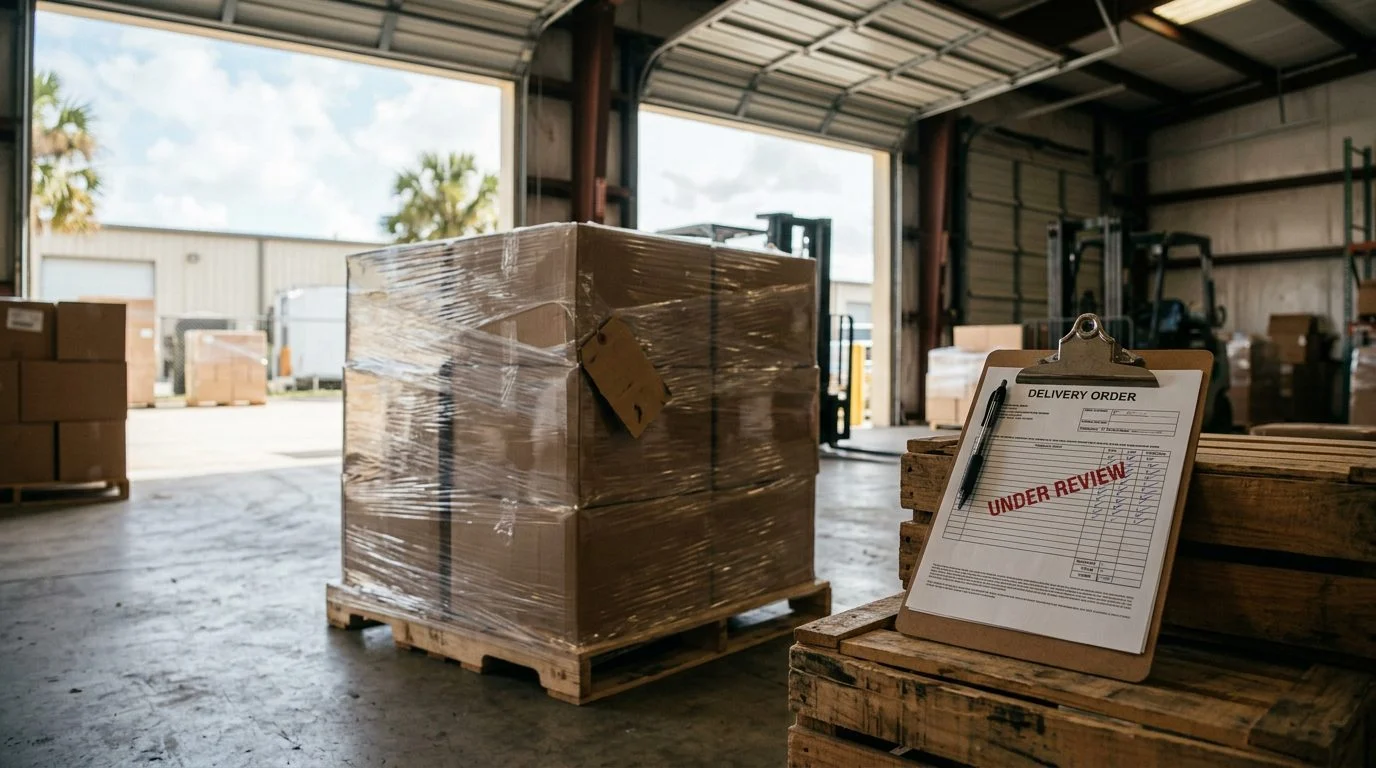
Construction Disputes: Payments, Liens, and Contract Fraud
Construction disputes usually involve unpaid work, disagreements over change orders, delays, and the scope of the job. Contractor and subcontractor fights are the most common version. A subcontractor may say it wasn’t paid for finished work. A contractor may say the owner approved extra work that was never paid.
A lien is a claim against a property for unpaid work or materials. A lien foreclosure case asks a court to enforce that claim against the property. These cases depend heavily on contract documents, payment applications, and project records such as daily logs and inspection reports.
Timing matters. Florida’s statute on construction claims runs from the date a certificate of occupancy or completion issues, or from abandonment if the work was never finished. Fla. Stat. § 95.11 reads: “(b) An action founded on the design, planning, or construction of an improvement to real property, with the time running from the date the authority having jurisdiction issues a temporary certificate of occupancy, a certificate of occupancy, or a certificate of completion, or the date of abandonment of construction if not completed, whichever date is earliest; except that, when the action involves a latent defect, the time runs from the time the defect is discovered or should have been discovered with the exercise of due diligence.” For hidden defects, the clock generally starts when the defect was or should have been discovered. In any event, the action must be commenced within 7 years after the date the authority having jurisdiction issues a temporary certificate of occupancy, a certificate of occupancy, or a certificate of completion, or the date of abandonment of construction if not completed, whichever date is earliest. Fla. Stat. § 95.11 reads: “(b) An action founded on the design, planning, or construction of an improvement to real property, with the time running from the date the authority having jurisdiction issues a temporary certificate of occupancy, a certificate of occupancy, or a certificate of completion, or the date of abandonment of construction if not completed, whichever date is earliest; except that, when the action involves a latent defect, the time runs from the time the defect is discovered or should have been discovered with the exercise of due diligence.” Counterclaims, cross-claims, and third-party claims that arise out of the conduct, transaction, or occurrence set out or attempted to be set out in a pleading may be commenced up to 1 year after the pleading to which such claims relate is served, even if such claims would otherwise be time barred.
Construction contract fraud is a claim that one side misrepresented costs, materials, licensing, or the work performed to get paid. The fraud rules are covered in the business fraud section below.
Real Estate and Commercial Property Disputes
Commercial real estate disputes involve leases, purchase contracts, and competing claims to business property. A landlord and tenant may disagree over rent, repairs, or early termination. A buyer and seller may dispute obligations under a commercial purchase contract. Owners may fight over the title or boundaries of a business site.
A quiet title case asks a court to decide competing claims to ownership of property. These cases often turn on recorded documents and the chain of title.
The written contract often shapes how a property dispute is framed. More detail is available on these topics: commercial lease disputes, commercial property purchase contracts, and title and quiet title.
Not sure what your next step is?
Talk it through with our team — we can walk you through how a situation like yours is usually handled and what your options are.
Business Fraud, Misrepresentation, and International Trade Disputes
Business fraud disputes often start when a buyer says a seller used false numbers or hid liabilities to close a sale. In many disputes over alleged misrepresentations, the facts that matter often include what was said, what the speaker knew at the time, and how the other side responded. Under a Florida appeals court ruling, a promise about future conduct can also be fraud if the promisor had no intention of keeping it.
Courts also separate contract disputes from tort claims. Florida courts generally do not let a party recover in tort for what is really a contract dispute, unless the tort is independent of the breach. Florida’s unfair and deceptive practices statute declares unfair methods of competition, unconscionable acts or practices, and unfair or deceptive acts or practices in the conduct of any trade or commerce unlawful, and it provides that, in construing that prohibition, due consideration and great weight shall be given to interpretations by the Federal Trade Commission and federal courts of Section 5(a)(1) of the Federal Trade Commission Act as of July 1, 2017.
International trade disputes in Florida often involve shipment terms, payment for cross-border goods, or performance by a foreign counterparty. These cases may go to a court or to arbitration, depending on the contract. Many international contracts name the 2021 ICC Arbitration Rules, which set the procedure for ICC arbitration.
Talking Through a Commercial Dispute With Ayala Law PA
Many people reading about these disputes are already in the middle of one. A partner may have stopped answering messages. A vendor may be sending repeated payment demands. A contractor may have recorded a lien on a property. Often, the person researching is handling a problem someone else created.
Ayala Law PA focuses on business litigation, including commercial and contract disputes, shareholder and partnership disputes, construction litigation, real estate litigation, and international trade litigation in Florida courts and arbitration. The firm’s only office is at 1646 W Snow Ave, Tampa, Florida. The firm represents businesses in Tampa, Hillsborough County, and the Tampa Bay area, including Brandon, Riverview, Plant City, and Temple Terrace. Attorney Eduardo A. Maura of Ayala Law PA is responsible for the content of this page.
Fees are discussed directly with the firm.
Frequently Asked Questions
What are some examples of commercial disputes?
Common examples include a supplier and buyer disagreeing over a contract, co-owners deadlocked over management, and a contractor who was never paid.
What is an example of a contract dispute?
A distributor says a shipment failed the written specifications, and the supplier says the goods met the contract.
What are commercial litigations?
They are court or arbitration cases where businesses resolve disputes they can’t settle on their own.
Eduardo A. Maura and the team at Ayala Law PA can review the contract, records, and timing in your situation. Reach out at (305) 570-2208 or through our contact page.



