
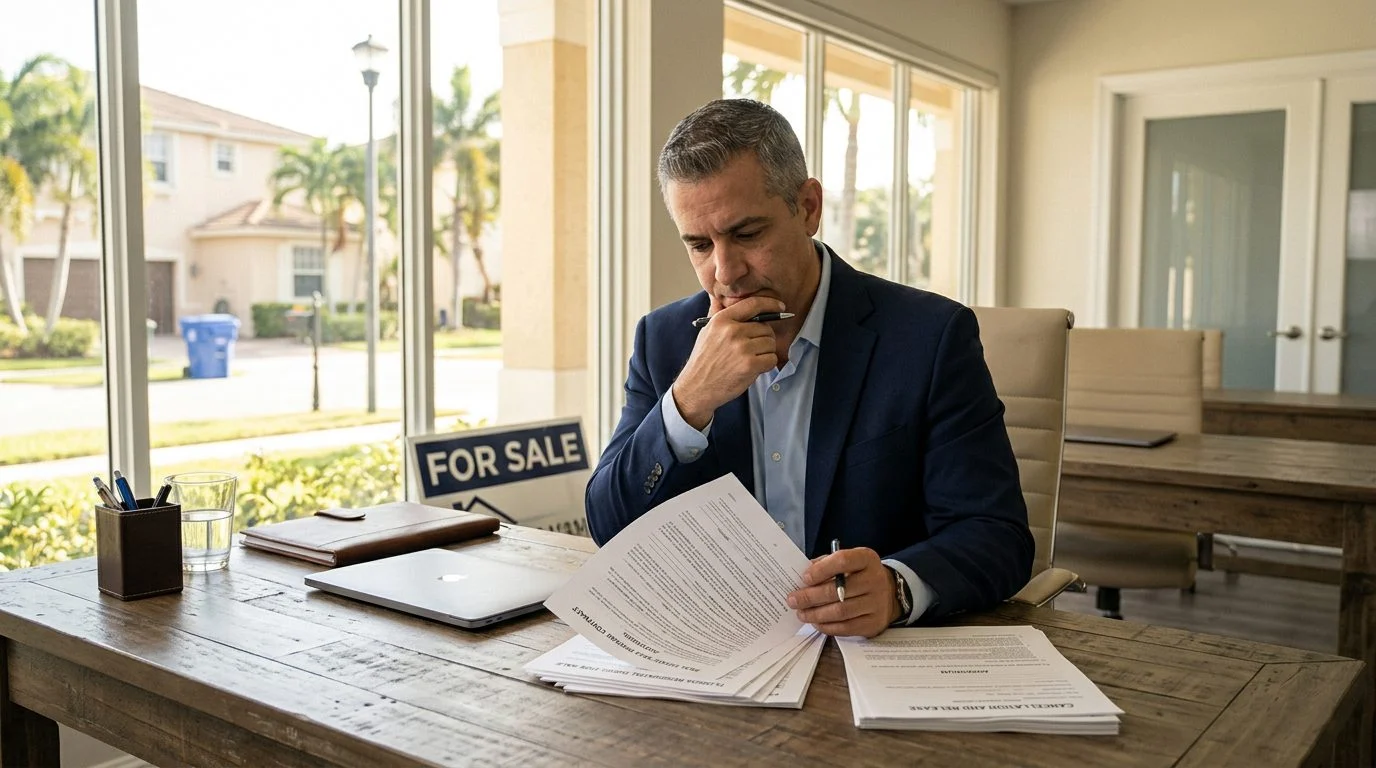
If a seller backs out of a deal after signing, the buyer may have legal options. If the seller only turned down an offer, there may be no binding deal at all. This page explains the difference in plain terms. It also covers what a buyer can ask a Florida court or arbitrator to do, and what to do first.
When a Seller’s Withdrawal Matters: Offer Versus Signed Contract
A seller generally can’t walk away from a binding, signed contract without a contract-based reason.
Whether a deal binds depends on the facts. The Florida Supreme Court has said that a contract, even an oral one, needs the basic pieces. Those are an offer, an acceptance, consideration (the value each side gives), and enough detail on the essential terms (St. Joe Corp. v. McIver).
Once the seller signs and accepts the buyer’s terms, the signed document becomes the main point.
The signed terms and the timing matter more.
If your seller has stopped working toward closing, you don't have to sort out your options alone. Reach out to our team to talk through your contract. Talk it through with our team — we can walk you through how a situation like yours is usually handled and what your options are.
What a Buyer Can Ask a Florida Court to Do
A buyer harmed by a seller’s breach can ask a court or arbitrator for relief. The right request turns on the contract, the property, and where the case stands.
Keep the signed contract, receipts, lender letters, and costs that came from the failed sale.
Buyers may also ask a court to order the seller to complete the sale.
Many contracts send disputes to arbitration instead of court. Florida law says a written agreement to arbitrate is generally valid and enforceable (Fla. Stat. § 682.02). If the court finds an enforceable agreement, it orders the parties to arbitrate (Fla. Stat. § 682.03). Federal law makes a written arbitration clause in a contract involving commerce valid, irrevocable, and enforceable, save upon grounds that exist at law or in equity for revoking any contract (9 U.S.C. § 2).
Buyers can’t always stack claims. Where an express contract covers the same subject, claims from that relationship generally can’t support unjust enrichment (Williams v. Johnson).
Earnest Money, Default Clauses, and Liquidated Damages
The written contract controls what happens to a deposit when a seller backs out. The buyer’s earnest money deposit shows the buyer is serious about the deal. It is usually held by an escrow agent named in the contract.
Read the default clause closely. It sets out what each side owes when one side fails to perform. Some clauses return the deposit to the buyer. Others let the seller keep it, or require the buyer to pick one remedy.
Some contracts also include a liquidated damages clause. This is an agreed amount owed if a side breaches. The exact wording matters. A clause that limits the buyer to the deposit can shrink what the buyer can recover.
A one-sided clause is not automatically unenforceable. Florida courts look for both unfair process and unfair terms, weighed together, before refusing to enforce a term (Basulto v. Hialeah Automotive).
Common Seller Reasons for Walking Away and How Contract Terms Control
Sellers often cite a higher offer, a change of mind on price, or a problem found in an inspection, appraisal, or title search. The reason a seller gives does not change the contract’s terms.
Contingencies are the main tool. A contingency is a condition, such as financing, inspection, or appraisal, that lets a party exit if it isn’t met by a set date.
Watch the dates. Inspection, appraisal, title, survey, and closing deadlines control much of the deal. Phrases like “time is of the essence” can make those dates strict.
A verbal release is hard to prove later, so get any release in writing.
Sellers sometimes claim a mistake to undo a deal. Florida’s Fourth District says a mutual mistake must be shared by both sides and must concern a fact at the essence of the contract (Waterside at Boynton Homeowners’ Ass’n). As a Florida appellate court has noted, the term ‘mutual mistake of fact’ is one of law, and rescission, an equitable remedy, is available only if the mistake is mutual and the fact is of the essence of the contract (Waterside at Boynton Homeowners’ Ass’n v. Southern Homes of Palm Beach, LLC).
Steps to Take Right After a Seller Backs Out
Start by collecting every document in the deal. That means the signed contract, addenda, counteroffers, and all emails and texts with the seller or agent.
Next, build a dated timeline. List the deadlines, deposits, inspection reports, lender steps, and the seller’s stated reasons. A clear timeline helps anyone reviewing the file.
Send written notice that names the contract terms you say were breached. Check the notice rules in the contract, such as how and where notice must go.
Avoid informal waivers or signing new papers until you know how they change your rights. A party who wants to undo a contract may lose that right by waiting after learning the facts behind it. Florida’s Second District describes this as ratification (Flaherty v. Flaherty).
Timing also comes from statute. Florida’s time limits for suing are set in Fla. Stat. § 95.11. A contract cannot shorten the time to sue below the statute’s period, and such a term is void (Fla. Stat. § 95.03). A claim generally starts running when its last element occurs (Fla. Stat. § 95.031).
Talk Through Your Situation With Ayala Law PA
A seller backing out can leave a buyer with a signed contract, a deposit in escrow, and a closing date that no longer holds. That is stressful, especially when a move or a business plan depends on the sale.
You may be reading this for a spouse, a business partner, or a family member who signed the deal. Many questions come up at once. Who holds the deposit? What are the deadlines? Should a court or an arbitrator hear the dispute?
Ayala Law PA focuses on business litigation, commercial litigation, contract disputes, real estate litigation, and construction litigation in Florida courts and arbitration. Eduardo A. Maura is the responsible lawyer for this page, and the firm’s office is in Tampa, Florida.
Case evaluations involve fees, and we’ll explain them before you decide anything. For related reading, see our pillar page on commercial property disputes.
If your seller has stopped working toward closing, call (305) 570-2208 or request a case evaluation.



