
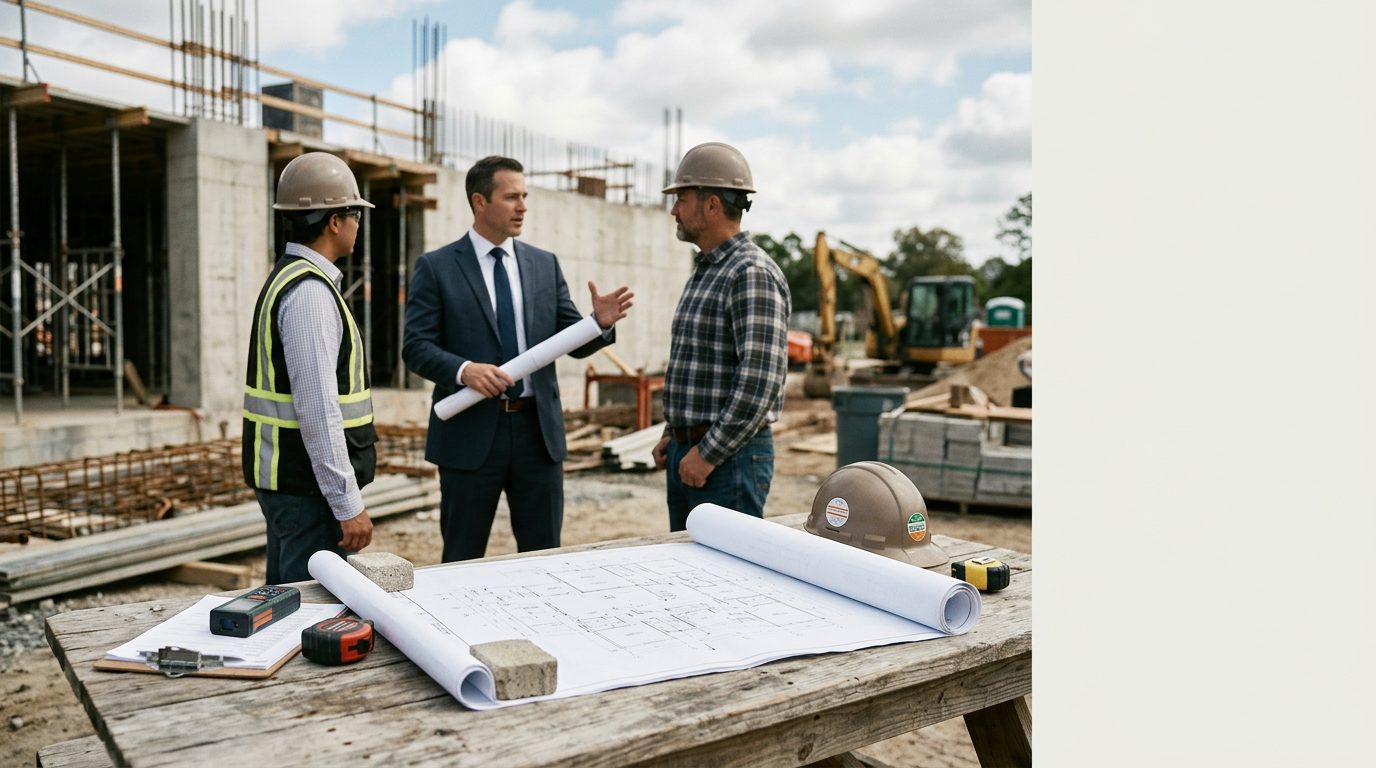
If you’re facing construction litigation in Plant City, the first question is usually whether you can recover payment or make the other side perform. The answer depends on your contract, the type of dispute, and the deadlines that apply. Florida treats each claim differently, so timing matters from the start.
This guide covers the disputes Plant City businesses and property owners often face, the deadlines that control them, and how a case moves through court or arbitration. Ayala Law PA handles construction litigation, including contractor and subcontractor disputes and lien foreclosure. Clients in Plant City and across Hillsborough County are served from the firm’s only office, at 1646 W Snow Ave in Tampa.
Construction Disputes That Lead to Litigation in Plant City
Most construction lawsuits start with money that never arrived or work that did not match the contract. Unpaid invoices from contractors to subcontractors are one of the most common problems.
Retainage is another frequent source of conflict. Retainage is the portion of each payment an owner holds back until the job is finished. Disputed change orders also cause trouble. A change order is a written change to the scope or price of the work, and unclear paperwork often leads both sides to disagree about who owes what.
Abandoned or delayed jobs create another common fight. A contractor may leave a project, or a job may stall for months. Owners then face higher costs, and subcontractors may go unpaid.
Many parties can be involved at once. General contractors, subcontractors, owners, and lenders may each have a claim or a defense. A subcontractor may look to the general contractor for payment, while the owner looks to the contract for the quality of the work.
Many disputes settle before anyone files suit. Demand letters, written notices, and direct talks often bring the parties to an agreement. Whether your dispute can settle early depends on the contract and the facts.
Not sure what your next step is?
Talk it through with our team — we can walk you through how a situation like yours is usually handled and what your options are.
Florida Lien Rights and the Deadlines That Control Them
A construction lien lets an unpaid party claim against the property where the work was done. Lien questions often turn on the specific facts of each project and the documents involved.
That chapter covers several connected topics. These include notices to the owner, claims of lien, lien deadlines, lien foreclosure, and fraudulent liens. Each step has its own rules, so a missed step can weaken or end a lien claim.
That is why timing should be reviewed early. Waiting while a payment grows more overdue can narrow your options.
If payment still does not come, the lien holder may file a lien foreclosure lawsuit. The property owner may contest the lien. A court looks at details such as who hired whom, when notices were sent, and who owns the property.
If you received a lien you believe is false, treat that as a separate issue. Chapter 713 addresses fraudulent liens, and the facts decide how that claim is handled.
Construction Defect Claims and the Pre-Suit Notice Process
A construction defect claim says finished work is faulty, incomplete, or built differently from the contract or permit. Defect disputes often involve water intrusion, foundation or framing problems, and work that does not match the plans.
Pre-suit steps can apply to defect claims. Review the timing of any notice before you file or respond to a lawsuit.
Deadlines matter just as much. Deadlines for filing construction-related lawsuits in Florida depend on the facts of each case, so timing should be reviewed early. The clock starts from the earliest of a temporary certificate of occupancy, a certificate of occupancy, a certificate of completion, or abandonment of unfinished construction.
For a latent defect, which is a hidden problem, the clock starts when the defect is discovered or should have been discovered with due diligence. Even then, the action must begin within 7 years after that certificate or abandonment date.
Good records help a defect claim. Photos, inspection reports, permits, and the contract scope all show what the work should have been.
Construction Contract Fraud and Breach Claims
A breach of contract claim says one side failed to do what the contract required. A fraud claim says a party lied or hid key facts to get paid or win a deal.
Examples include a contractor who falsely claims a license it does not hold, payments diverted away from the job, and materials swapped without disclosure. Each case turns on its own facts.
Florida gives fraud claims a discovery rule. When a filing period begins to run in Florida can depend on the facts of each case, so the timing of a claim should be reviewed promptly. An action for fraud must still begin within 12 years after the fraud was committed. For how Florida courts have applied these timing rules, see the Florida Supreme Court opinions.
Some transfers can be challenged too. Fla. Stat. § 726.105 addresses transfers made with actual intent to hinder, delay, or defraud a creditor. This can matter when a builder moves assets to avoid paying suppliers.
Useful evidence includes payment records, bids, schedules, emails and texts, job-site logs, and signed change orders. What a remedy looks like depends on the contract terms and the facts.
How a Construction Dispute Moves Through Florida Courts and Arbitration
A construction dispute usually moves from document review to a written demand. From there it may go to mediation, arbitration, or court, depending on the contract and whether talks succeed.
Most cases follow a similar path. The steps include reviewing the contract and paper trail, sending demand letters and any required notices, mediating, filing, exchanging documents and sworn answers through discovery, and filing motions.
Mediation is a common step. Under Fla. Stat. § 44.102, a court must refer most filed damage actions to mediation when one party asks, unless an exception applies. Florida law protects what is said and written during mediation, and the confidentiality and privilege rules are set out in section 44.405 of the Florida Statutes.
Many construction contracts require arbitration. Under Fla. Stat. § 682.02, an arbitration agreement in a record is generally valid and enforceable. Under Fla. Stat. § 682.03, a court may stay related court proceedings once arbitration is ordered.
Venue depends on location. Under Fla. Stat. § 47.011, a case goes where the defendant resides, where the cause of action accrued, or where the property is located.
How long does a construction lawsuit take? Timing depends on the court calendar, how complex the claims are, how much discovery is needed, and whether the case settles. No one can promise a timeline at the start.
Frequently Asked Questions About Construction Litigation in Plant City
Whether a suit is worth it depends on the amount at stake, the contract, the other side’s assets, and the evidence.
Is it worth suing a contractor?
It depends on the amount, the contract, and the evidence. If the contract has an attorney’s fee clause, that clause is enforced under the contract itself, and Fla. Stat. § 57.105 makes a one-sided fee clause reciprocal so the other party may also recover fees if it prevails. Construction-lien disputes also have a separate fee provision in Chapter 713.
What do construction litigators do?
They review contracts and lien rights, send notices, and gather documents. They also negotiate, file or defend claims, and present the case in court or arbitration.
How much does a construction lawyer cost?
Fees depend on the scope of work, the complexity of the dispute, and the stage of the case. The firm discusses fee arrangements directly with each client.
Not sure what your next step is?
Talk it through with our team — we can walk you through how a situation like yours is usually handled and what your options are.
Working With Ayala Law on a Plant City Construction Dispute
Ayala Law PA is located in Tampa at 1646 W Snow Ave. Clients in Plant City and across Hillsborough County are served from that office.
Eduardo A. Maura is the lawyer responsible for this page. The firm’s support staff help with document handling and day-to-day office work.
The firm focuses on business litigation, commercial litigation, contract disputes, shareholder disputes, construction litigation, real estate litigation, and international trade litigation. It handles these matters in Florida courts and arbitration.
If a payment is overdue or a lien notice has arrived, call (305) 570-2208 or request a case evaluation with Ayala Law PA.



