
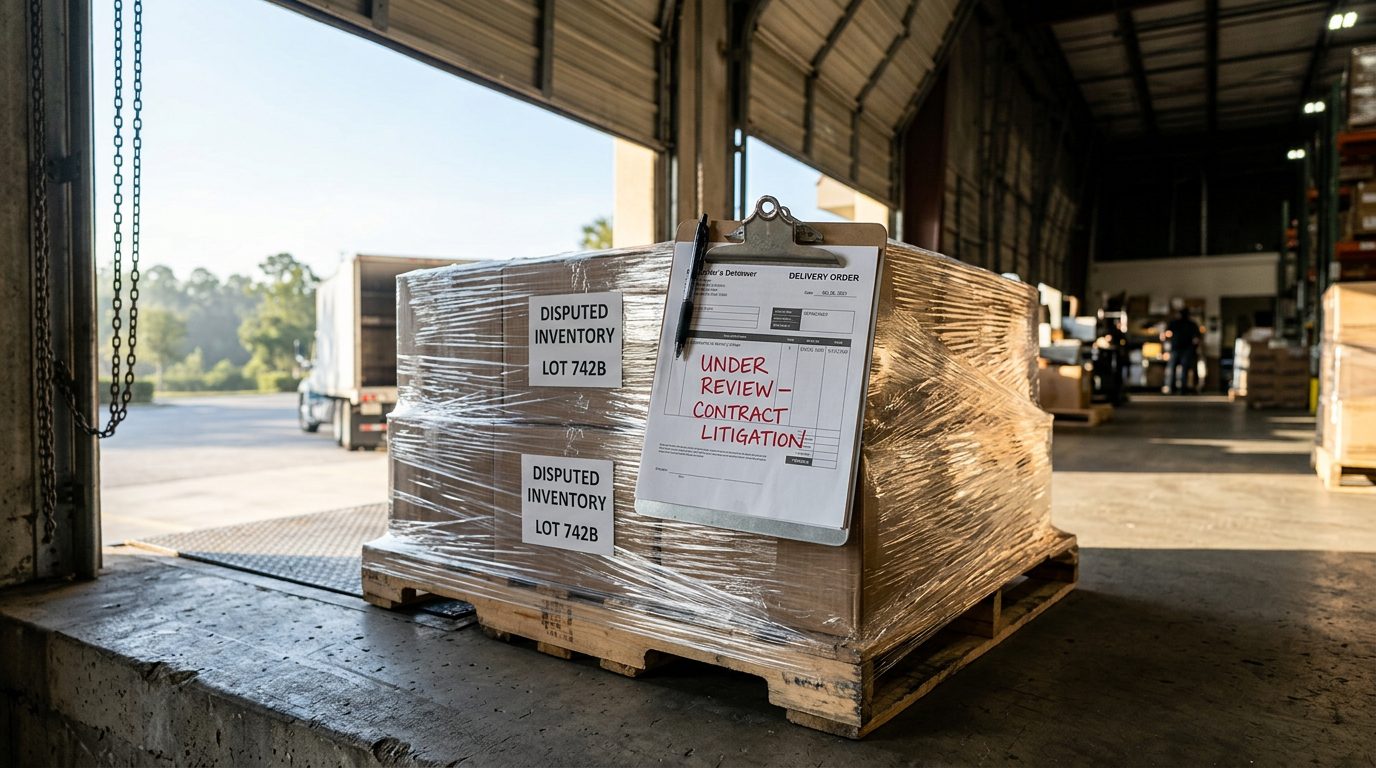
What Commercial Contract Litigation Covers and Who It Serves
Commercial contract litigation is a court or arbitration case over a business agreement that one side did not honor. It often involves supply, vendor, service, distribution, licensing or sale agreements.
Owners and managers usually reach this point when a customer falls behind on payments, a vendor delivers the wrong goods, a subcontractor misses deadlines, or a buyer disputes the price. Typical disputes include unpaid invoices, disputed payment terms, unclear contract language, and disagreements over earnout payments after a business sale. The common thread is a gap between what the contract says and what actually happened.
Ayala Law PA handles these disputes in Florida circuit courts and in arbitration. The practice focuses on business owners and entrepreneurs who need to decide quickly whether to demand performance, negotiate, or file a case. The first questions are practical: what does the agreement require, what did the other side do, and how much time is left to act?
Not sure what your next step is?
Talk it through with our team — we can walk you through how a situation like yours is usually handled and what your options are.

What Our Representation Includes
Representation covers the full path, from reviewing the paperwork through the final court order or arbitration award. Each matter is scoped after an initial review of the facts.
- Document review. The firm reviews the full agreement, including amendments, purchase orders, emails and payment records, to identify the obligations and remedies that apply.
- Damages assessment. The firm looks at direct losses, unpaid amounts and the records needed to prove each one. No particular recovery is promised.
- Demand letter. The firm drafts a letter that describes the breach, states the cure required and sets a response deadline.
- Negotiation and mediation. Settlement talks come first when they make sense. Mediation follows when a court orders it or both sides agree.
- Litigation and arbitration. The firm drafts and files complaints, handles discovery and motions, and prepares for trial or an arbitration hearing.
- Enforcement. A judgment can become a lien on the other side’s real property once a certified copy is recorded in the county, under Fla. Stat. § 55.10. That step can matter when a winning party needs to collect.
How a Contract Dispute Moves Forward
Most contract disputes follow a set order: review, demand, negotiation, and only then a filed case or arbitration. Each stage has a purpose, and skipping one can weaken your position.
- Initial discussion. You describe the agreement, what went wrong and what you want. You provide the documents you have.
- Deadline and clause check. The firm reviews limitation periods, notice requirements, cure periods, and any arbitration or forum clause.
- Demand letter. A letter sets out the breach and a window for response. Some disputes settle at this stage.
- Filing or arbitration. If talks fail, the case is filed in the proper Florida court or arbitration begins. Under Fla. Stat. § 47.011, an action must be brought in the county where the defendant resides, where the cause of action accrued, or where the property in litigation is located.
- Discovery, motions and mediation. Each side exchanges information and challenges weak claims. When one party asks, Florida courts must refer many civil damages cases to mediation, unless an exception applies under Fla. Stat. § 44.102.
Timelines vary widely. The firm describes the stages you can expect rather than fixed dates, because court calendars and the other side’s conduct change the pace.
Deadlines and Contract Terms to Check Early
The deadline to sue is set by statute, and a contract cannot shorten it. Checking dates and clauses early keeps your options open.
- Oral contracts. Under Florida law, an action on a contract not founded on a written instrument must be commenced within four years. Written contracts generally have a longer period under the same statute, so the type of agreement matters.
- Shortened deadlines. A contract clause that sets a shorter time to sue than the statute allows is void under Fla. Stat. § 95.03.
- Notice and cure clauses. Some agreements require written notice and a window to fix the problem before a lawsuit. Skipping that step can give the other side a procedural argument.
- Arbitration clauses. Under Fla. Stat. § 682.02, a written agreement to arbitrate existing or future controversies is valid, enforceable and irrevocable, subject to grounds that exist for revoking any contract. If one side moves to compel arbitration, Fla. Stat. § 682.03 requires the court to pause related court claims while it decides.
- Sales of goods. For a sale of goods priced at $500 or more, Fla. Stat. § 672.201 generally requires a signed record showing the contract exists. After accepting goods, a buyer must notify the seller of a breach within a reasonable time under Fla. Stat. § 672.607, or risk losing the remedy.
A common mistake is assuming the other side will fix the problem on its own. Waiting while talks drag on can narrow your options. Review the agreement early, and see the firm’s contract disputes practice page for more on how these matters are handled.
Why Business Owners Choose Ayala Law PA
Ayala Law PA is a business litigation practice based in Tampa that focuses on business and commercial disputes. The page describes how the firm works, not how any past matter ended.
- The lawyer. Eduardo A. Maura is the lawyer responsible for this page and for the matters the firm handles. Support staff help with scheduling, records and client communication.
- The practice areas. The firm focuses on business litigation, commercial litigation, contract disputes, shareholder disputes, construction litigation, real estate litigation and international trade litigation.
- The office. The firm’s only office is at 1646 W Snow Ave in Tampa. Clients in Tampa, Brandon, Riverview, Plant City, Temple Terrace and across Hillsborough County are served from that Tampa office. The firm has no office in Tampa.
Common Questions About Commercial Contract Litigation in Florida
The questions below cover points readers often raise before deciding what to do next.
Do I need a lawyer to send a demand letter?
A demand letter can be sent without a lawyer. A vague letter, however, can weaken later claims.
Can I keep doing business with the other party?
Many clients keep limited dealings going while protecting their rights. The contract terms and the facts decide what is safe.
What if my contract was verbal or only partly written?
Oral and partly written agreements can still be enforced in some cases. Proof is harder, and the deadline for oral contracts is shorter, so act early.
How are fees handled?
Fee terms are explained and put in writing before the firm takes on a matter. Review them so you know every amount you may owe.
Will my case go to trial?
Some disputes settle early and others do not. The firm prepares each case as if it may go to trial.
Not sure what your next step is?
Talk it through with our team — we can walk you through how a situation like yours is usually handled and what your options are.
Talk With Eduardo A. Maura About Your Contract Dispute
If a customer has fallen behind on an invoice, a contractor has left a job unfinished, or a partner refuses to honor your deal, the next step is a review of the agreement and its deadlines. Call (305) 570-2208 or request a case evaluation through the contact page. Fee terms are explained in writing before any engagement.



