
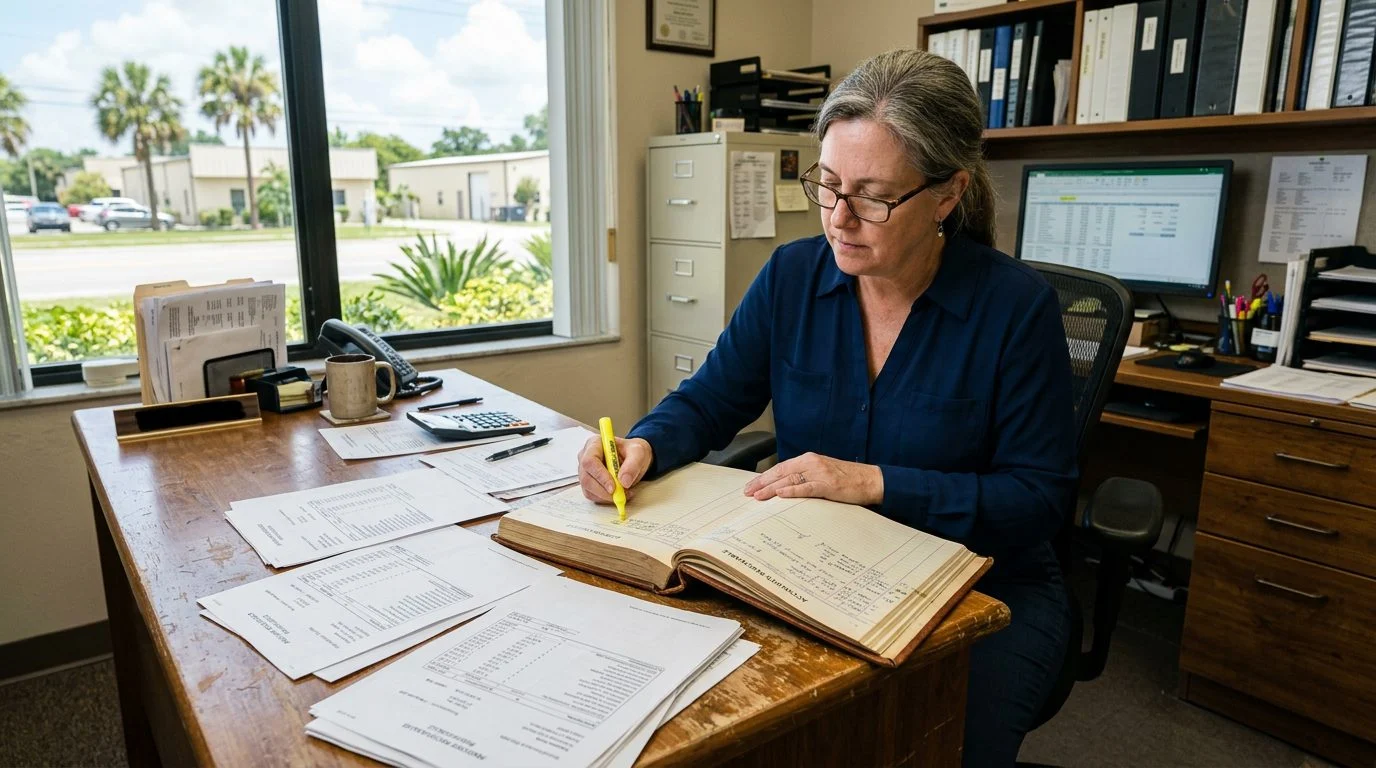
You sent a bill. The customer sent back a smaller check, and the note on it says “payment in full.” Can you cash it and close the account?
If a partial payment arrives on a debt you are disputing, you may wonder whether accepting it ends the disagreement. The answer turns on the circumstances of each case. Three things shape the answer: whether the amount was really in dispute, what the contract says, and what you do next.
What Happens If You Cash a Partial Check Marked “Payment in Full”?
When a payer offers less than the amount claimed, and the other side accepts it to settle the dispute, the claim may be settled. Lawyers call this accord and satisfaction.
The words “payment in full” matter, but they are only one fact. A court or arbitrator would also ask whether the parties really disagreed about the amount. They would look at the messages between you, too. Each file is different, so the paperwork matters as much as the label.
Holding a partial check marked "payment in full" and weighing whether to deposit it? Our team can talk through your contract and timing at (305) 570-2208. Talk it through with our team — we can walk you through how a situation like yours is usually handled and what your options are.
Which Florida Statutes Apply to a Partial Payment?
Whether a partial payment marked ‘payment in full’ settles a debt depends on the specific facts of the dispute and on Florida law on accord and satisfaction. A separate evidence rule also protects settlement talks.
Florida’s sales-of-goods rules sit in Chapter 672, the state’s version of the Uniform Commercial Code for goods. They explain when a buyer has accepted goods. See Fla. Stat. § 672.606 for what counts as acceptance.
A separate rule protects negotiations. Fla. Stat. § 90.408 says an offer to compromise a claim disputed as to validity or amount is inadmissible to prove liability or the value of the claim. Negotiators can talk without the offer becoming proof.
Chapter 672 covers sales of goods, but [§ 90.408] applies to any offer to compromise a claim which was disputed as to validity or amount, not only sales. A dispute over services or construction work can involve different rules, so the contract’s terms and the work performed matter.
What Facts Decide Whether the Payment Ends the Dispute?
Several facts usually matter, including what the deal required and whether the amount was really in dispute.
Start with acceptance. Under § 672.606, acceptance happens when a buyer, after a reasonable chance to inspect, tells the seller the goods conform. It also happens when the buyer keeps them despite a problem, fails to make an effective rejection after a reasonable chance to inspect, or does any act inconsistent with the seller’s ownership; a wrongful act against the seller counts only if the seller ratifies it.
Next, look at the deal itself. The Florida Supreme Court has said an oral contract still needs an offer, an acceptance, consideration, and enough detail on the essential terms, as stated in St. Joe Corp. v. McIver. If the deal was verbal, your proof is the texts, emails, invoices, and purchase orders that show what was agreed.
Finally, look at the dispute itself. A payment on an amount nobody questioned may be treated differently from one on a claim the other side actively challenged. Gather the emails that show when the disagreement started.
Can You Reject the Check or Undo the Settlement?
Accepting goods narrows what you can do later.
Acceptance has consequences. Fla. Stat. § 672.607(2) says acceptance of goods precludes rejecting the goods accepted. Acceptance does not, by itself, cut off other remedies for a problem with the goods. Under Fla. Stat. § 672.607, a buyer who accepts goods can no longer reject the goods accepted, and a buyer who accepted knowing of a nonconformity cannot revoke that acceptance because of it unless the acceptance was on the reasonable assumption that the nonconformity would be seasonably cured. Acceptance does not, of itself, impair any other remedy the chapter provides for nonconformity.
Timing matters too. Under § 672.607(3)(a), the buyer must, within a reasonable time after he or she discovers or should have discovered any breach, notify the seller of the breach or be barred from any remedy. Otherwise the buyer is barred from any remedy. Waiting can cost the claim.
Sellers have their own options. If a buyer rejects a nonconforming delivery, § 672.508 lets the seller, if it seasonably notifies the buyer of its intent to cure, make a conforming delivery within the contract time. If the seller had reasonable grounds to believe the tender would be acceptable, with or without a money allowance, the seller may instead, if it seasonably notifies the buyer, have a further reasonable time to substitute a conforming tender. That helps suppliers who want to fix the problem rather than accept a reduced payment.
Which Business Situations Lead to a Partial Check Like This?
The usual setup is a disputed invoice for goods, services, or construction work, paid short with a settlement note.
A customer says a shipment arrived damaged or incomplete. It sends a smaller check marked “payment in full.” The central question becomes whether the buyer accepted the goods and when it raised the problem.
A general contractor pays a subcontractor’s progress billing short, citing defective or unfinished work. These disputes often turn on the contract’s payment terms and on what work was actually completed.
A supplier or service provider receives a short payment on an invoice it believes is owed in full. The first question is whether the amount was ever really disputed before the check arrived.
The same check can carry different consequences depending on the facts behind it.
What Should You Do Before Depositing a Partial Payment?
Before you deposit, read the whole check, pull your paperwork, and write down the dates.
- Read the full check and any cover letter for settlement language and any link to a dispute.
- Pull the contract, purchase orders, invoices, delivery records, and emails that set the amount owed.
- Record the date you received the check and every message about the dispute.
- Decide, before you deposit, whether to accept the payment, reject it, or return it. If you return it, put your position in writing.
Timing counts. The notice rule in § 672.607(3)(a) requires the buyer to notify the seller within a reasonable time after it discovers, or should have discovered, a problem, or be barred from any remedy. Sitting on a defect can cost you the claim.
Not sure what your next step is?
Talk it through with our team — we can walk you through how a situation like yours is usually handled and what your options are.
How Our Firm Approaches These Disputes
Eduardo A. Maura is the responsible lawyer for this page, and the firm focuses on business disputes.
The firm handles business litigation, commercial litigation, contract disputes, shareholder disputes, construction litigation, real estate litigation, and international trade litigation in Florida courts and arbitration. It represents businesses in Hillsborough County and the Tampa Bay area.
The firm’s only office is at 1646 W Snow Ave in Tampa, Florida, and it represents businesses in Tampa and Hillsborough County. Our team reviews the contract, the check, and the correspondence first, then explains the options in plain terms. Each dispute turns on its own facts, so the first step is a close look at the documents.
Talk Through Your Partial Payment With Our Team
A partial check marked “payment in full” is easier to handle when the contract and timing are reviewed before you deposit it.
Does cashing a partial check automatically end the debt?
Whether a payment ends a debt depends on the facts of the dispute, the wording of the check, and what the payee does next.
How long do I have to report a problem with goods I accepted?
You must notify the seller within a reasonable time after you discover, or should have discovered, the breach. Otherwise, you may be barred from any remedy, under § 672.607(3)(a).
Can a seller fix a rejected delivery?
Yes.
If a partial check marked “payment in full” is on your desk and a deposit decision is coming up, call (305) 570-2208 or use our contact page. We can talk through the contract and timing before anything is deposited.



