

The three remedies for breach of contract that courts most often discuss are money damages, specific performance, and rescission with restitution. Each one fixes a different problem. This page explains what each remedy does, the limits to keep in mind, and how to tell which one may fit your situation.
The three remedies for breach of contract at a glance
The three remedies are money damages, specific performance, and rescission with restitution. Money damages ask for payment. Specific performance asks a court to order the other side to do what it promised. Rescission with restitution cancels the deal and sends each side back toward where it started.
Whether a particular remedy fits a dispute depends on the facts of that dispute. Whether a breach happened is a separate question. It turns on the contract’s wording and what each side actually did. Our Florida contract disputes guide for Tampa-area businesses covers the wider picture, from the first warning sign to the options that follow.
Not sure what your next step is?
Talk it through with our team — we can walk you through how a situation like yours is usually handled and what your options are.
Money damages: asking for payment
Money is the remedy most people think of first. For a sale of goods, Florida law spells out when a seller may sue for the price. Under Fla. Stat. § 672.709, when a buyer fails to pay the price as it becomes due, the seller may recover that price for goods the buyer accepted, or for conforming goods lost or damaged within a commercially reasonable time after the risk of loss passed to the buyer. The seller may also recover the price of goods identified to the contract if, after reasonable effort, it is unable to resell them at a reasonable price, or the circumstances reasonably indicate that such effort will be unavailing.
Chapter 672 covers sales of goods. It does not cover every kind of contract, so the first step is to confirm which rules fit your deal. Buyers have duties too. Under Fla. Stat. § 672.607, a buyer must pay at the contract rate for goods it accepted. A buyer that accepted a delivery must also notify the seller of the breach within a reasonable time after discovering it or when it should have discovered it. Otherwise, the buyer can be barred from any remedy.
That notice point catches many business owners off guard. A slow reply to a bad shipment can cost a claim that would otherwise have been available. Keep dates, invoices, and written messages about the problem.
Specific performance: asking a court to enforce the promise
Specific performance asks a court to order the other side to carry out its promise instead of only paying money. The circumstances of each deal, including whether it involves unique property, can shape which remedies a party considers.
It is not automatic. Each case is different, so the facts and the contract language matter when a dispute reaches this stage. Before any remedy, a court also asks whether a valid contract existed. The Florida Supreme Court has said that even an oral contract must meet basic requirements: an offer, an acceptance, consideration, and essential terms stated clearly enough. See St. Joe Corp. v. McIver.
For the broader categories of disputes the firm handles, see our contract disputes overview.
Rescission and restitution: unwinding the deal
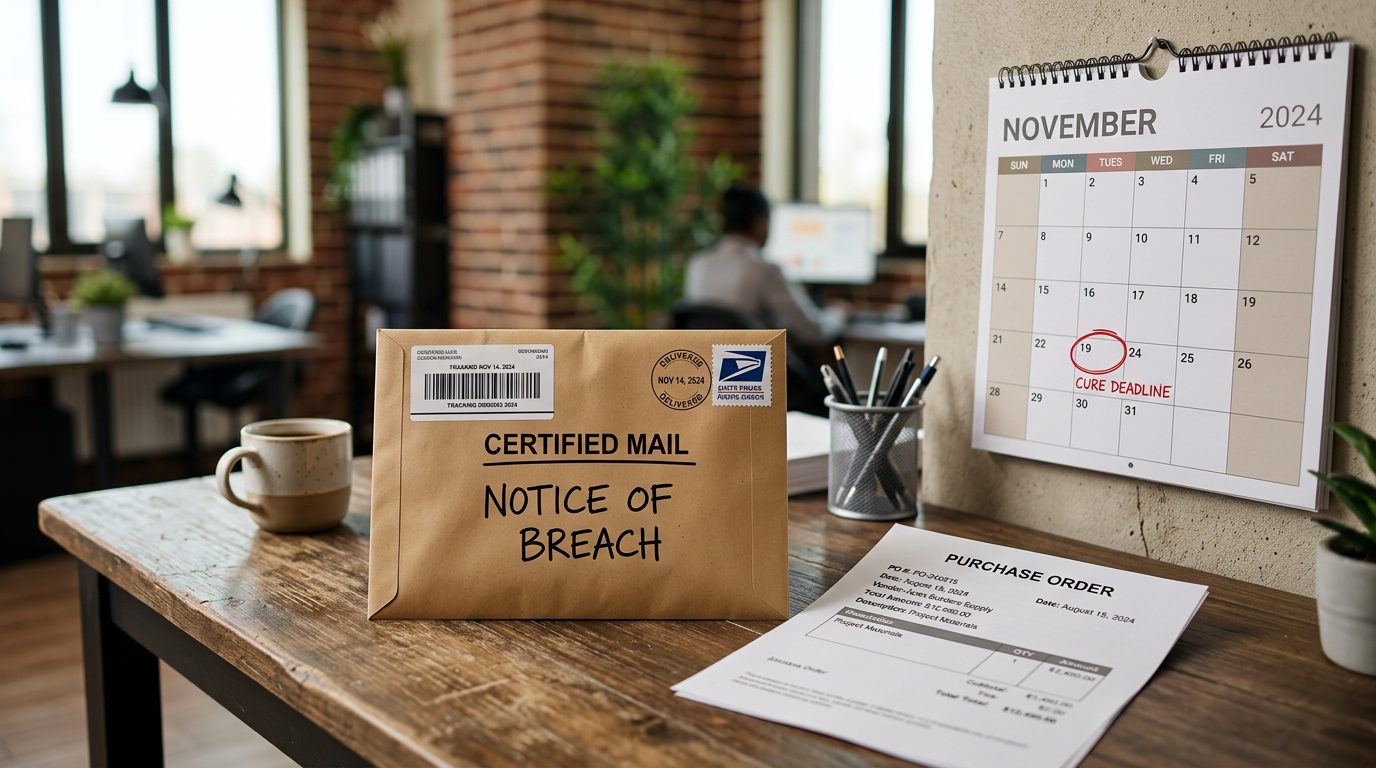
Rescission cancels a contract. Restitution returns what each side gave the other. Together, they try to undo the deal. Consider a business that paid a deposit and received materials under an agreement that was later set aside. Restitution may address getting the deposit back and what happens to the materials.
Rescission has limits. Florida courts have said rescission for a mutual mistake applies only when both sides were mistaken and the mistaken fact goes to the essence of the contract. See Waterside at Boynton Homeowners’ Ass’n v. Southern Homes of Palm Beach, LLC. A one-sided mistake can also support rescission in limited circumstances. See DePrince v. Starboard Cruise Services, Inc..
Timing matters too. In Flaherty v. Flaherty, the court explained that ratification occurs when a party entitled to rescind a voidable contract fails to do so after learning the facts that justify rescission. The court called this a general rule, not an automatic result.
Which remedy may fit, and what to do next
Start with two questions: what did the other side do, and what did you lose or need? Money owed for goods points toward a price claim. A promise to deliver something unique may point toward specific performance. A deal built on a mistake may point toward rescission and restitution.
The right fit depends on the facts of your contract, the breach, and what you need. Many readers are looking at these options after a counterparty stopped paying, stopped performing, or sent a demand letter. Some are researching for a company or partner, not only for themselves.
Ayala Law PA focuses on business litigation, commercial and contract disputes, shareholder disputes, construction litigation, real estate litigation, and international trade litigation. The firm’s only office is at 1646 W Snow Ave in Tampa. The firm represents businesses in Tampa and Hillsborough County in Florida courts and arbitration. Eduardo A. Maura is the responsible lawyer for this page. Consultations carry a fee, and the firm explains those terms when you call.
Frequently asked questions
What are the three remedies for breach of contract?
They are money damages, specific performance, and rescission with restitution.
Can a Florida court cancel a contract?
Rescission may be available in limited situations, such as some mistakes. Ratification can prevent it if the right holder waits too long after learning the facts.
If the other side has stopped paying or performing, you don’t have to sort out these remedies alone. Call Ayala Law PA at (305) 570-2208, or reach out through the contact page, to talk through your specific contract.



