

What can frustrate a contract? Every deal is different, so a careful look at the contract documents and at what happened after signing is a practical first step in any dispute over performance. Common examples include losing the item a deal depended on, a key person becoming unable to perform, or a new government order that blocks the work. Whether any event excuses performance depends on the contract’s wording and the facts.
What it means when a contract is frustrated
Frustration is a term used in contract disputes about events that occurred after a deal was signed. Every dispute turns on its own facts.
Frustration is different from an ordinary breach.
A judge or arbitrator usually decides these questions. Florida law generally treats a written arbitration agreement as valid and enforceable, except on grounds that exist for revoking any contract (§ 682.02). If your contract has an arbitration clause, that clause may decide where the argument is heard.
If an unexpected event has stalled a deal your business signed, you don't have to work out the contract alone, and we can talk through the facts with you. Talk it through with our team — we can walk you through how a situation like yours is usually handled and what your options are.
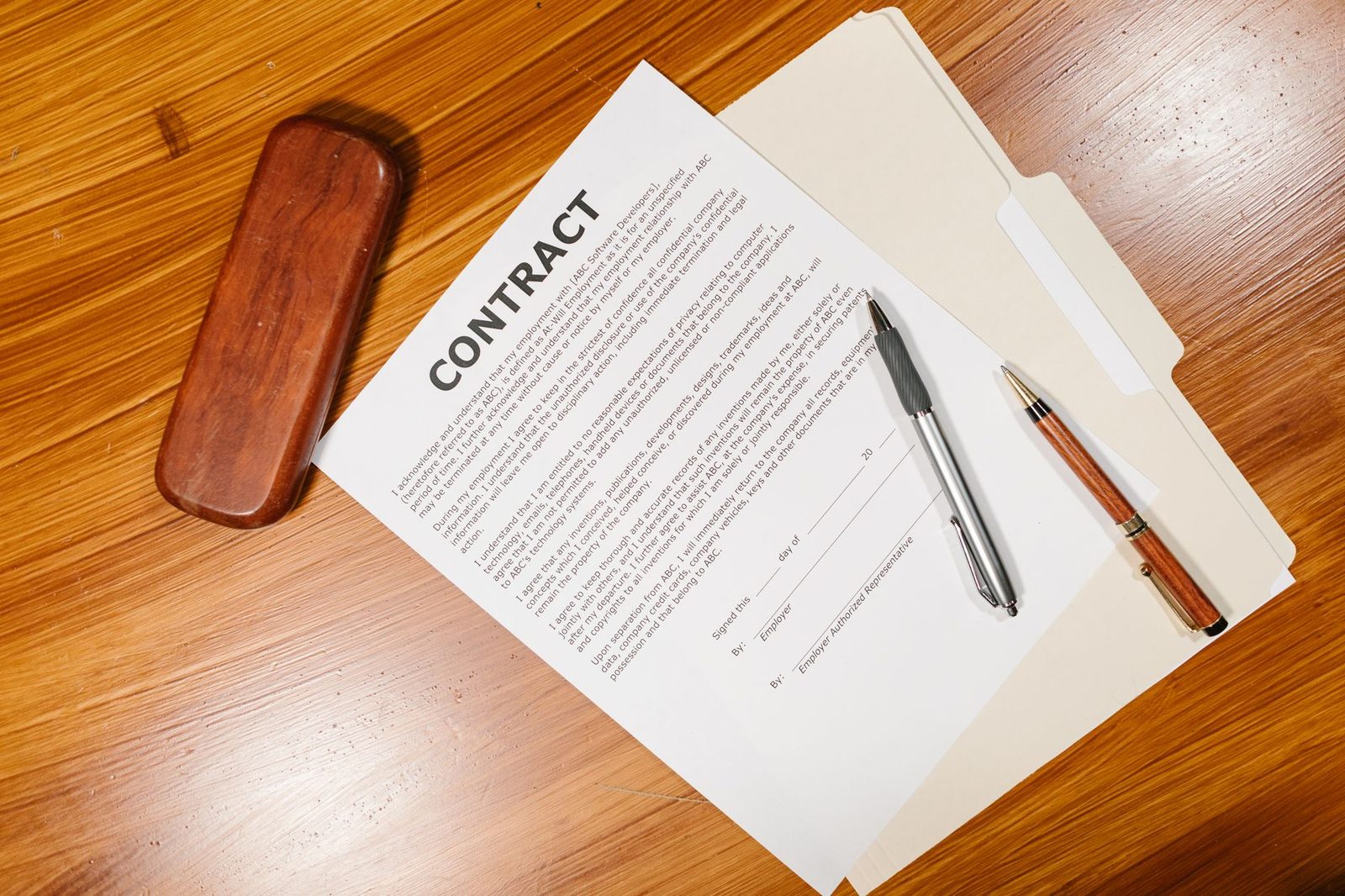
Events that commonly frustrate a deal
The most common frustrating events are the loss of the item a deal depended on, the loss of an essential person, and government action that blocks the work. These are general patterns, not a prediction of any particular result.
- Loss of the subject matter. A building or machine the agreement was built around is destroyed through no one’s fault.
- Death or incapacity. A person whose personal skill was essential can no longer perform.
- Government action. A permit denial, a new prohibition, or a stop-work order blocks the work. The change could not reasonably have been expected when the parties signed.
- Failed core assumption. Both sides relied on a basic fact or condition that turned out to be false or never happened.
- Illegality after signing. Continuing to perform would now break the law.
A mistake about a basic fact is a separate argument. In the Waterside at Boynton decision, Florida’s Fourth District explained that rescission for mutual mistake requires a mutual mistake about a fact that goes to the essence of the contract. One side’s own mistake usually does not qualify.
Causes that usually do not excuse performance
- Self-induced hardship. Who caused the problem is one of the facts a dispute may turn on.
- Foreseeable risks. Whether a risk was foreseeable at signing is one of the facts a dispute may turn on.
- Financial trouble alone. Whether a party’s finances changed is one of the facts a dispute may turn on.
Your conduct after the event matters too. In the Flaherty v. Flaherty decision, the Second District described ratification for voidable contracts. Ratification occurs when a party who could rescind fails to do so after learning the facts that warrant rescission. That court did not apply the rule automatically in that case, so it is a general principle, not a fixed result.
How the contract’s own wording controls the outcome
The contract’s own words often decide the result before any general rule does. Read the exact language before you decide your next step.
- Force majeure clauses. These list events that excuse or suspend performance. Whether your event fits the list turns on the exact words used.
- Notice requirements. Many clauses require prompt written notice of a delay. For goods a buyer has accepted, Florida law requires notice of a breach within a reasonable time after the buyer discovers or should have discovered it, or the buyer may be barred from any remedy (§ 672.607).
- Filing deadlines. A contract provision that sets a shorter time to sue than the statute of limitations is void (§ 95.03).
- Where the dispute goes. Florida venue law generally requires suit in the county where the defendant resides, where the cause of action accrued, or where the property is located (§ 47.011). This rule does not apply to actions against nonresidents.
Construction contracts add their own timing rules. Permit delays, supplier failures, and stop-work orders usually turn on schedule, change-order, and delay terms. Florida generally requires that an action founded on the design, planning, or construction of an improvement to real property be commenced within four years, with the time running from the date the authority having jurisdiction issues a temporary certificate of occupancy, a certificate of occupancy, or a certificate of completion, or the date of abandonment of construction if not completed, whichever date is earliest; when the action involves a latent defect, the time runs from when the defect is discovered or should have been discovered with the exercise of due diligence, and in any event the action must be commenced within 7 years after that earliest date (§ 95.11). The Pinellas County lien law guide explains Notice of Commencement and lien releases.

If your business is facing an event like this
Start by writing down what happened, when it happened, and what the contract says about it. A supplier that stopped delivering, a permit that halted a job, or a key person who can no longer perform each raises the same question: must the business keep going? Keep a dated record of the event, the clauses that may apply, and every written notice exchanged.
Ayala Law PA focuses on business litigation, commercial litigation, contract disputes, shareholder disputes, construction litigation, real estate litigation, and international trade litigation. The firm serves businesses in Tampa, Hillsborough County, and the Tampa Bay area. Eduardo A. Maura is the responsible lawyer for this page. The firm’s only office is at 1646 W Snow Ave in Tampa, Florida. If a matter may be better handled by another lawyer or firm, the firm may refer it.
If an unexpected event has stalled a deal your business signed, reach out through the firm’s contact page or call (305) 570-2208 to talk through the contract and the facts.



