
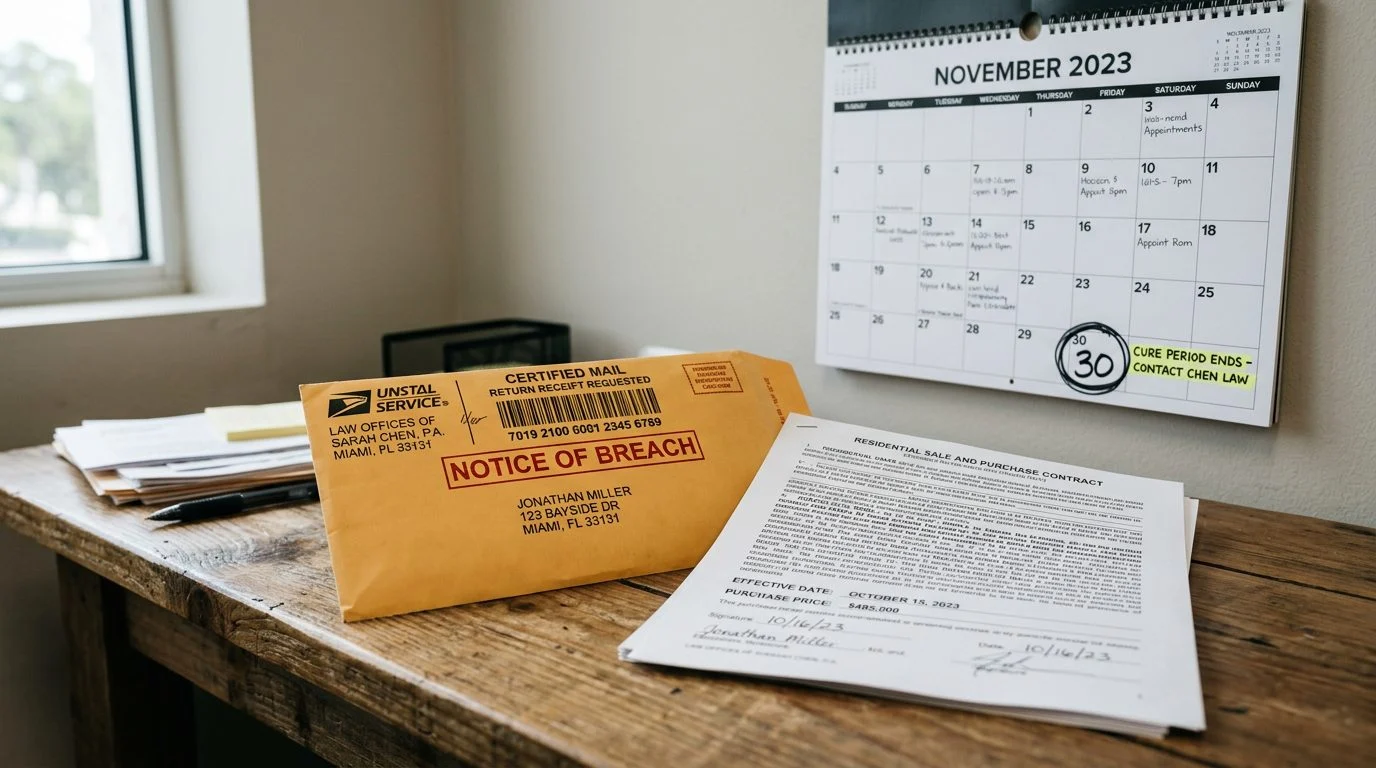
The Short Answer: It Depends on What the Contract Says
Without that right, walking away can cost the buyer the deposit or lead to a damages claim.
The terms of a signed contract are often central to how a dispute over it is evaluated. Its termination, contingency, notice, and default language decide most disputes. Many buyers lose a lawful exit because they missed a date or sent notice the wrong way, not because they lacked a reason to leave.
Read the contract before you send any message to the seller, the agent, or the lender. A casual text can create confusion about what you intend to do.
This page covers the common exit routes, the deadlines that matter, and the costs of leaving without a right to do so. It explains general Florida rules, which apply differently depending on the facts of each deal.
If you hold a signed contract and are deciding whether you can walk away, reach out to our team so we can review your deadlines and documents with you. Talk it through with our team — we can walk you through how a situation like yours is usually handled and what your options are.
Can You Back Out of a Real Estate Contract in Florida?
Yes, in several lawful ways. The most common route is a contingency. A contingency is a condition written into the contract, such as getting a loan, an appraisal at or above the price, or an acceptable inspection. If the condition is not met, the contract often lets the buyer end the deal by a stated deadline.
Contingency terms are specific. Check which conditions the contract includes, when each deadline falls, and how the notice must be delivered. Some contracts also include a title contingency tied to the title search.
Two other routes exist. Both sides can sign a written release that ends the deal. Whether a breach is serious enough depends on the contract language and the facts.
A buyer may also try to undo a deal for a mistake. Florida courts allow rescission for mutual mistake only if the mistake is mutual and concerns a fact that goes to the essence of the contract. Waterside at Boynton Homeowners’ Ass’n v. Southern Homes of Palm Beach, LLC applies that rule. A one-sided mistake is a harder argument.
How Long Can a Buyer Back Out Before Closing?
Contingency deadlines usually run from the contract’s effective date. The calendar matters more than the closing date. If the inspection or financing deadline passes, the right to cancel under that term may be gone.
Many buyers assume they can still back out until closing. That assumption is a common and costly mistake. Confirm the deadline in the contract, not in your memory of the talks.
Notice matters too. Confirm how and to whom termination notice must go, and by when. Some contracts require written notice to a named party or the escrow agent. A phone call or a text to the agent may not meet that requirement.
Extensions must also be in writing. Do not assume a deadline moved because everyone agreed on a call. DK Arena, Inc. v. EB Acquisitions I, LLC holds that promissory estoppel cannot be used to enforce an oral agreement that the Statute of Frauds requires to be in a signed writing.
Finally, the time to sue is set by law. A contract cannot shorten it. Under Fla. Stat. § 95.03, a contract term that sets a shorter period to bring an action than the statute allows is void.
What Is the 3-Day Rule for Cancelling a Contract?
Whether one applies depends on the type of transaction and the documents the buyer received.
The date matters. Keep a record of when each document reached you, and write down that date.
If you are unsure whether a window applies, count from the date you received each document. Missing that count is a common reason buyers lose a cancellation right they could have used.
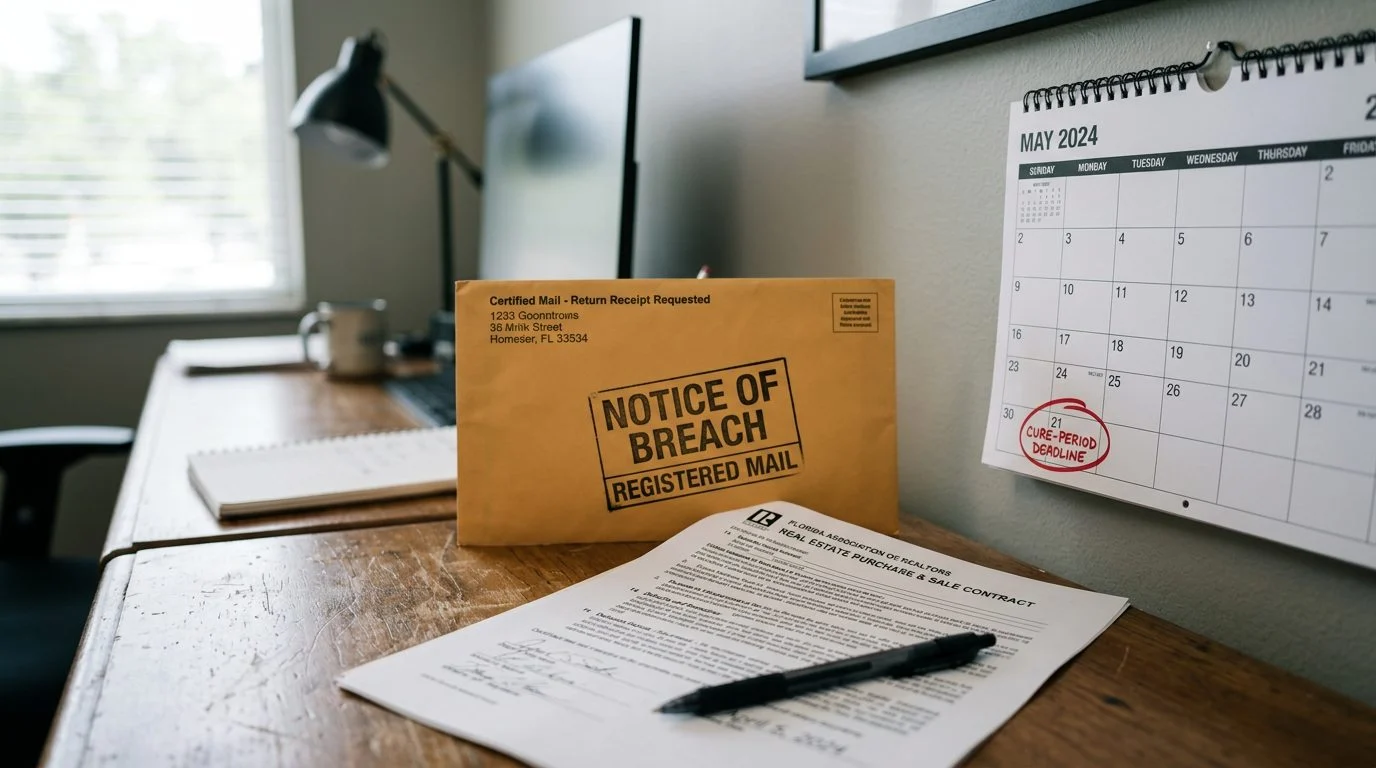
Can a Buyer Change Their Mind After Signing?
A signed contract is generally binding. Florida courts start with the written agreement.
Verbal promises that conflict with the signed contract are a weak basis for changing its terms. Florida treats a contract as binding when the basic elements are present, including offer, acceptance, consideration, and essential terms. St. Joe Corp. v. McIver states those requirements for oral contracts.
Several terms decide what happens next:
- Earnest money: The deposit often goes to the seller if the buyer defaults, but the default clause controls how the deposit is handled.
- Liquidated damages: Some contracts set an agreed amount the buyer owes after a default. Read the amount and the conditions for it.
- Specific performance: A court can order the buyer to complete the purchase instead of paying money.
- Unfair terms: A buyer may argue a clause is unfair. Florida courts require both procedural and substantive unfairness before refusing to enforce a term. Basulto v. Hialeah Automotive sets that test.
- Arbitration: A written agreement to arbitrate is generally enforceable. Under Fla. Stat. § 682.02, the court decides whether an agreement to arbitrate exists.
What Happens If a Buyer Backs Out Without a Right to Do So?
The seller may claim the earnest money deposit, depending on the contract and Florida law. The seller may also pursue actual damages, such as losses from reselling the property for less.
Attorney fees follow a default rule. Under Florida law, each party generally pays its own attorney’s fees unless a contract or statute provides otherwise. Price v. Tyler applies that American Rule. So fee-shifting terms in the contract matter.
Business buyers face similar exposure. They may also face disputes over partial payments, deposits, and related obligations. Clauses about arbitration or a specific court can shape where the fight happens. Under Fla. Stat. § 682.03, once a court orders arbitration, it must, on just terms, stay any judicial proceeding that involves a claim subject to the arbitration.
Early legal review can clarify which notices, deadlines, or options may still be available. Acting early often leaves more choices open than waiting until a demand letter arrives.
Not sure what your next step is?
Talk it through with our team — we can walk you through how a situation like yours is usually handled and what your options are.
Talk With Ayala Law PA About Your Contract
Ayala Law PA focuses on business litigation, commercial litigation, contract disputes, real estate litigation, and related construction and international trade matters in Florida courts and arbitration. Eduardo A. Maura is the responsible lawyer for this page.
The firm’s only office is in Tampa, at 1646 W Snow Ave. The firm handles matters for businesses in Tampa, Hillsborough County, and the Tampa Bay area in Florida courts and arbitration. Fees depend on the matter, and the firm can explain them during a conversation about your file.
If you have a signed contract and are weighing whether you can walk away, call (305) 570-2208 or book a case evaluation. Bring the contract, every amendment, and any notices you have sent or received.
Frequently asked questions
Can a buyer back out of a contract in Florida?
Otherwise, walking away can cost the deposit or lead to a claim.
Is there a 3-day rule for cancelling a Florida contract?
Not for every contract. Some transactions have a statutory window, and whether one applies depends on the transaction type and when documents were received.
What happens to earnest money if a buyer backs out?
It depends on the default clause and Florida law. The seller may claim the deposit or other damages.



