
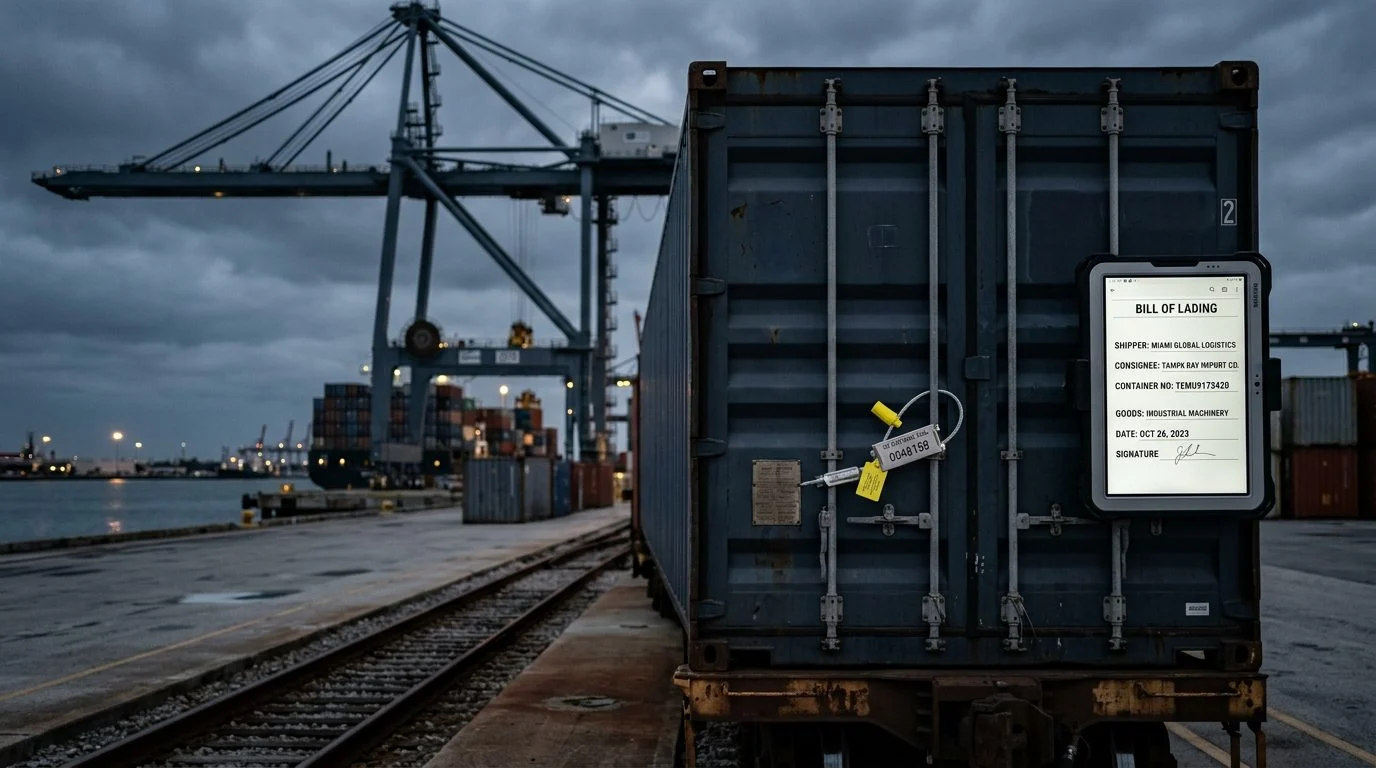
Which Court Hears Customs Duty Appeals?
A Court of International Trade customs appeal is a federal matter.
Not every trade dispute goes there. A payment or delivery fight with a foreign buyer is usually a contract dispute. Those cases may belong in a Florida court or in arbitration. Sorting your problem into the right category comes first.
Ayala Law PA focuses on international trade litigation, along with commercial and contract disputes. Businesses in Hillsborough County and the Tampa Bay area can contact Ayala Law PA to discuss a commercial dispute. The international trade litigation page covers the wider picture.
If a CBP bill or a denied protest has you unsure which court handles the fight, our team can talk through your records and deadlines with you. Talk it through with our team — we can walk you through how a situation like yours is usually handled and what your options are.
How a Customs Duty Dispute Reaches the Court
Customs disputes often start with a request that the government agency look again at its decision. That request is the first step, not the court case. Deadlines for that request can be short, so read the dates on every government notice as soon as it arrives.
Think of the process in order. An entry is brought in, the government settles the duty owed on it, and the notice that follows starts the clock on your options. Track those dates closely, because they shape what you can do next.
Gather your paperwork early. That means entry records, commercial invoices, classification and valuation papers, and every notice from the agency. A common mistake is waiting to see whether a bill goes away. Waiting can cost time you cannot get back.
What the Court of International Trade Hears
Customs disputes usually turn on three questions. How are the goods classified? How are they valued? Which duty rate applies? A business that disagrees with the government’s numbers often disputes one of these points.
Tariff challenges form a separate category. Recent cases challenging IEEPA duties have been brought in that court. Court orders in those cases change over time, so check the current status before relying on any ruling.
Keep the difference in mind. A dispute over the duty on one entry is not the same as a broad challenge to a tariff policy. The two can call for different filings and different timing. Review that difference with a lawyer before you file anything.
Where Other Trade Disputes Go
Contract disputes with foreign buyers or suppliers often belong in a state court or in arbitration. Florida’s venue statute says actions shall be brought in the county where the defendant resides, where the cause of action accrued, or where the property in litigation is located. The statute does not apply to actions against nonresidents, which matters when the other side is a foreign company. See the Florida venue statute.
Arbitration is common in cross-border deals. Under the Florida arbitration statute, an agreement in a record to arbitrate a controversy is valid, enforceable, and irrevocable, except on a ground that allows revoking a contract. Federal law sets a similar rule for written arbitration provisions in contracts involving commerce. See federal arbitration law.
Clear drafting helps. The ICC arbitration clause guidance recommends naming the governing law, the place of arbitration, and the language of arbitration. Mediation is another option. The American Arbitration Association mediation resource notes it may be used for cross-border commercial disputes.
Appeals After the Court of International Trade
An appeal is a separate step with its own timeline. Don’t assume a deadline from one stage carries over to the next.
Check the rules for each stage. Write down the date each order, judgment, or notice was issued. Those dates make it easier to see what was decided and when.
Keep every order, judgment, and notice in one file, in date order. Missing paperwork can slow down a review later, so store copies of all emails with the agency and your customs broker too.
Frequently Asked Questions
Customs duty disputes
The right forum still depends on the type of claim.
Can a Florida court hear a contract dispute with a foreign supplier?
Sometimes, depending on the parties and the contract. Florida’s venue statute does not apply the same way to nonresidents.
Is there a refund for IEEPA tariffs?
That question turns on each entry and on court orders in pending cases. Bring your entry records and CBP notices for review.
Do U.S. courts have jurisdiction in foreign countries?
Which court hears a dispute is one question. Whether a judgment can be enforced abroad is another, and it depends on that country’s laws.
Not sure what your next step is?
Talk it through with our team — we can walk you through how a situation like yours is usually handled and what your options are.
Bring Your Customs Records to a Case Evaluation
If a CBP bill, a liquidation notice, or a denied protest has you unsure which court handles it, start with your paperwork. Liquidation is the step where the government settles the duty owed on an entry.
Useful documents include entry summaries, commercial invoices, CBP notices, protest filings, and emails about the duty or the contract. Organized records help you and your lawyer see the deadline and the forum.
Eduardo A. Maura is the responsible lawyer for this page. Ayala Law PA’s office is at 1646 W Snow Ave in Tampa, and the firm takes on commercial disputes for businesses in Hillsborough County and Tampa Bay. Fee terms are discussed at the evaluation. To talk through your deadline and forum, request a case evaluation or call (305) 570-2208.



