
What is a real estate litigation lawyer used for? A real estate litigation lawyer represents a person or business in a property dispute that has moved past the deal stage. The dispute may involve a purchase contract, what a seller disclosed, who owns a piece of land, or unpaid construction work. The lawyer may take the matter to a Florida court or to arbitration.
This page explains what that work covers, how it differs from closing and estate work, and what to gather if you’re facing one of these problems.
What a real estate litigation lawyer does
A real estate litigation lawyer handles the dispute itself. The lawyer steps in when a property problem can’t be fixed by signing more paperwork.
The work usually starts with an evaluation. The lawyer reviews the contracts, deeds, and correspondence, then explains the options. Often the next step is a demand letter, a written statement of the claim and what the client wants. Many disputes settle at that stage or in mediation. If they don’t, the lawyer can file a lawsuit or pursue arbitration when the contract requires it.
People usually need this help when the other side has stopped cooperating, a deadline is running, or a claim has shown up in the public records. For a full overview of the practice, read our real estate litigation overview.
If a co-owner has stopped responding about shared property, or a sale fell apart near closing, reach out to Ayala Law PA to talk through your situation. Talk it through with our team — we can walk you through how a situation like yours is usually handled and what your options are.

How litigation work differs from closings and estate planning
Litigation work begins after a deal or ownership arrangement breaks down. Closing and drafting work happens before that point.
Transactional real estate work covers drafting and reviewing purchase contracts, handling closings, and recording deeds. The goal is to complete a transaction correctly.
Litigation is different. The lawyer asks what went wrong, what the contract says, and which court or arbitration process fits. The goal is to resolve the dispute, often through negotiation, and to go to court or arbitration when needed.
Estate planning and probate are separate areas. They deal with wills, trusts, and how property passes after death. Real estate litigation focuses on disputes over property, not on drafting estate documents.
Many people need help at more than one stage. The better question is where you are right now. If a deal is still being made, you need transaction help. If a dispute has started, you need help with the dispute.
Purchase and sale contract disputes
A purchase and sale dispute usually means one side wants out, or believes the other side broke the deal. Common examples include:
- A buyer or seller backing out before closing.
- A disagreement over earnest money, the deposit paid to show the buyer is serious.
- A closing that fell through.
- A dispute over whether a contingency or deadline was met.
Remedies depend on the contract and the facts. A party may ask a court to enforce the contract. Some ask for specific performance, an order that the other side complete the deal. Others seek money damages.
Time limits matter. Florida’s limitations statute sets a five-year period for an action on a contract founded on a written instrument and a four-year period for an oral or unwritten contract, including a sale of goods, § 95.11. Florida also voids any contract clause that shortens that period, § 95.03.
Many purchase contracts include a dispute clause. Florida enforces written agreements to arbitrate, § 682.02.
Timing also matters after a problem appears. A party with a right to undo a voidable contract can lose that right by waiting. Florida courts call this ratification. It happens when a party fails to act after learning the facts, according to Flaherty v. Flaherty. Courts apply this rule case by case.
Seller disclosure, fraud, and misrepresentation claims
A buyer may have a claim when a seller hides a defect or states a false fact about the property. The case usually turns on what the seller said, what the seller knew, and when.
Lawyers typically review disclosure forms, inspection reports, listing materials, and written messages such as emails and texts. Written messages often show what was said before the deal closed.
Florida’s limitations statute sets a four-year period for actions founded on fraud, § 95.11.
If the plaintiff can demonstrate that the person promising future action does so with no intention of performing or with a positive intention not to perform, such a promise may also constitute a fraudulent misrepresentation. A promise about future conduct can also be fraud in some cases. That happens when the person making the promise had no intention of keeping it. In Frutafino v. Dole Chile, Florida’s Third District Court of Appeal explained that if the plaintiff can demonstrate that the person promising future action does so with no intention of performing or with a positive intention not to perform, such a promise may also constitute a fraudulent misrepresentation.
The other side may raise its own defenses. Early case review helps you see those issues before you decide how to respond.
Title, boundary, and easement disputes
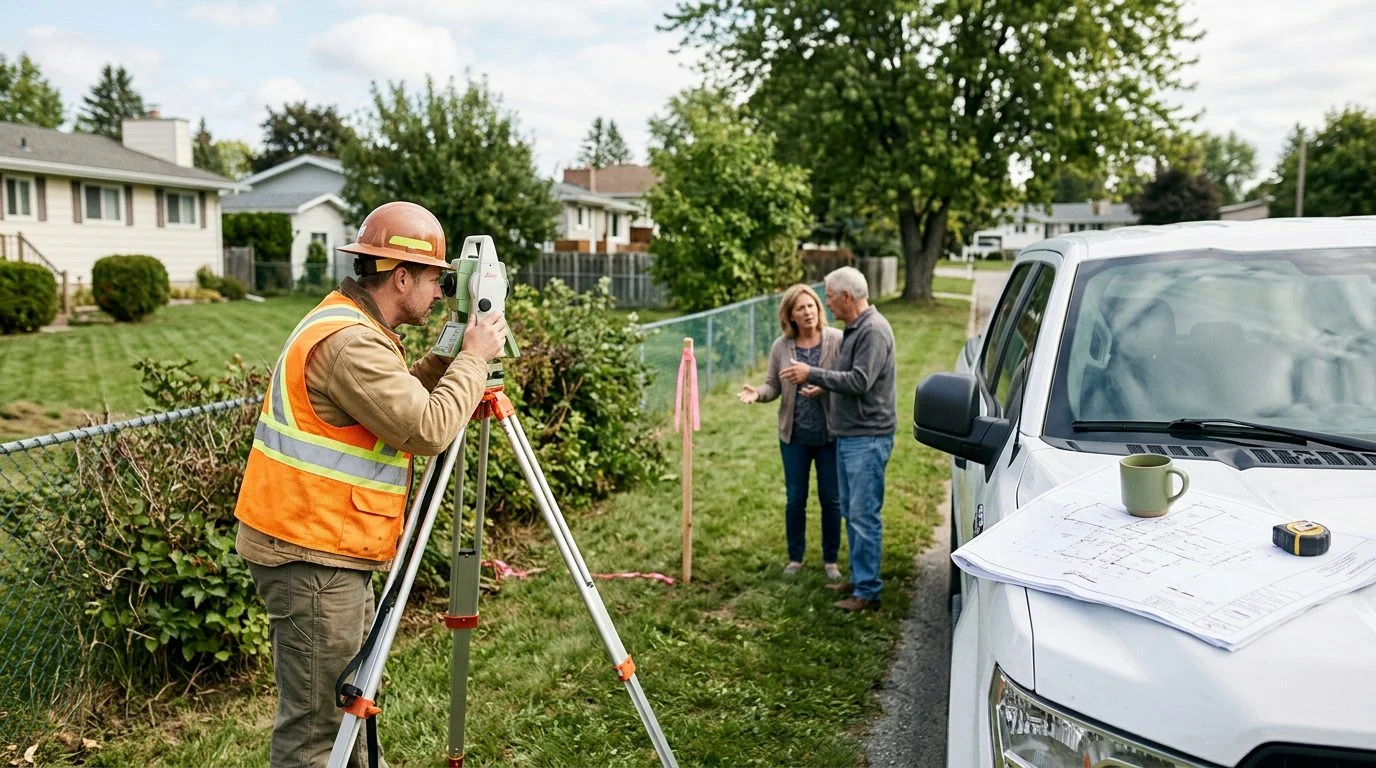
Title and boundary disputes ask who owns a property and where its lines run. Title problems can include competing claims to ownership or errors in recorded documents. A recorded claim or defect that casts doubt on ownership is called a cloud on title.
A quiet title action is a court case used to settle competing claims to a property. Boundary disputes with a neighbor work similarly. So do disputes over easements, which are rights to use part of someone else’s land, such as an access path.
Surveys, recorded plats, title commitments, and the deed are usually central. Florida generally requires an estate or interest of freehold, or for a term of more than 1 year, in real property to be created or transferred by a signed written instrument. That instrument must be signed in the presence of two subscribing witnesses, § 689.01. Fla. Stat. § 689.01 reads: “unless by will and testament, or other testamentary appointment, duly made according to law; and no estate or interest, either of freehold, or of term of more than 1 year, or any uncertain interest of, in, to, or out of any messuages, lands, tenements, or hereditaments, shall be assigned or surrendered unless it be by instrument signed in the presence of two subscribing witnesses by the party so assigning or surrendering, or by the party’s lawfully authorized agent, or by the act and operation of law; provided, however, that no subscribing witnesses shall be required for a lease of real property or any such instrument pertaining to a lease of real property.” Under Fla. Stat. § 689.01, an estate or interest of freehold, or for a term of more than 1 year, in real property generally must be created, made, granted, transferred or released by a written instrument signed in the presence of two subscribing witnesses, unless by will or other testamentary appointment; no subscribing witnesses are required for a lease of real property, and under subsection (2) the witnessing requirement may be satisfied through audio-video communication technology. Fla. Stat. § 689.01 reads: “unless by will and testament, or other testamentary appointment, duly made according to law; and no estate or interest, either of freehold, or of term of more than 1 year, or any uncertain interest of, in, to, or out of any messuages, lands, tenements, or hereditaments, shall be assigned or surrendered unless it be by instrument signed in the presence of two subscribing witnesses by the party so assigning or surrendering, or by the party’s lawfully authorized agent, or by the act and operation of law; provided, however, that no subscribing witnesses shall be required for a lease of real property or any such instrument pertaining to a lease of real property.”
A written document that misstates the deal can sometimes be challenged. Under Florida law, rescission, which undoes a contract, may be available for a mutual mistake when the mistake is mutual and goes to the essence of the contract. A scrivener’s error, where the writing says something other than what the parties agreed, can qualify. This is one ground among others. The Florida mutual mistake ruling explains the rule.
Time limits apply here too. Florida’s real property statute generally requires the person suing to recover property, or a predecessor, to have held it within seven years before filing, § 95.12.
Co-owner disputes and the “who is on the deed” question
Wanting someone off the deed does not end their ownership on its own. The deed, how title is held, and any agreements between the owners all matter.
Changing the locks or shutting someone out can create legal risk of its own.
Common co-owner problems include disagreements over use, sale, rent, or buyout. Another is one owner who stops paying shared costs or stops responding.
For more examples, see property dispute examples.
Not sure what your next step is?
Talk it through with our team — we can walk you through how a situation like yours is usually handled and what your options are.
Construction and lien disputes that affect real property
A construction dispute can reach a property when an unpaid contractor or subcontractor records a lien against it. A lien is a claim against the property that secures payment for work or materials. Lien foreclosure is the court process used to enforce that claim when payment isn’t resolved.
The documents usually involved include the construction contract, payment applications, change orders, and lien notices. Property owners and developers both face these disputes.
Florida’s construction limit generally runs from the earliest of several dates. Those include the certificate of occupancy, a temporary certificate of occupancy, a certificate of completion, or abandonment of construction. A latent defect, one that was hidden, runs from when it was or should have been discovered.
For local coverage, see the Tampa real estate litigation page and the Hillsborough County page.
Steps before and during a case: demand letters, mediation, and court or arbitration
Most property disputes start with a demand letter and negotiation before anything is filed. The letter states the claim, the key facts, and what the client wants.
This is called a lis pendens. It warns later buyers and lenders that ownership is in question.
Florida courts must refer many money-damages cases to mediation when a party asks. Exceptions apply, including cases where the parties have agreed to binding arbitration. The requesting party must also be willing and able to pay the mediation costs, or the costs must be able to be equitably divided between the parties, § 44.102. Fla. Stat. § 44.102 reads: “(2) A court, under rules adopted by the Supreme Court: (a) Must, upon request of one party, refer to mediation any filed civil action for monetary damages, provided the requesting party is willing and able to pay the costs of the mediation or the costs can be equitably divided between the parties, unless: 1.” Mediation communications are generally confidential, § 44.405.
If the refusing side opposes the request, the court decides the issue summarily and orders arbitration unless it finds there is no enforceable agreement to arbitrate, § 682.03. Federal law also enforces written arbitration clauses in contracts involving interstate commerce, 9 U.S.C. § 2.
Florida’s venue rule says an action must be brought in the county where the defendant resides, where the cause of action accrued, or where the property is located, except for actions against nonresidents, § 47.011. For land in Hillsborough County, the property’s location is one of those options.
If your dispute involves a real estate agent, see suing a real estate agent in Florida.

What to gather and how to reach Ayala Law PA
Gathering the right papers before you call can save time. Useful items include:
- The purchase or sale contract and any amendments
- Disclosure forms and inspection reports
- The deed and title commitment
- Any survey or recorded plat
- The closing statement
- Lien notices and payment records
- Key emails, texts, and letters
Keep them in date order if you can. Don’t change or delete anything.
Eduardo A. Maura is the responsible lawyer for this page. Ayala Law PA’s bona fide office is at 1646 W Snow Ave in Tampa, Florida. Ask our office about fees for a case evaluation before you schedule one.
Is a real estate litigation lawyer the same as a real estate lawyer?
Not always. A real estate lawyer often handles closings and contracts. A real estate litigation lawyer handles disputes after a deal or ownership arrangement breaks down.
Can I kick someone out of my house if they are on the deed?
Usually not by yourself.
What is a quiet title lawsuit in Florida?
It is a court case used to settle competing claims to a property. It is often used when conflicting claims or recording errors cloud ownership.
If a co-owner has stopped responding about shared property, or a sale fell apart near closing, you don’t have to work out the next step alone. Contact Ayala Law PA at (305) 570-2208 or through the case evaluation request to talk through your situation.



