
Breach of Contract in Florida: What Business Owners Should Know First
A breach of contract happens when one party fails to do what an agreed deal requires, and has no legal excuse. In Florida, that failure starts a business claim. The steps you take next often matter as much as the breach itself.
This guide covers the decisions that come before a demand letter or a lawsuit. You’ll read the contract, sort out the breach, follow the notice terms, track deadlines, and choose where to file. Ayala Law PA concentrates in business and commercial litigation, including contract disputes. Ayala Law PA’s only office is in Tampa, at 1646 W Snow Ave, and the firm represents businesses in Hillsborough County and the Tampa Bay area.
If a customer or vendor has stopped performing on a deal you signed, you may have a claim worth reviewing, and our team can walk through the contract with you. Talk it through with our team — we can walk you through how a situation like yours is usually handled and what your options are.
What Counts as a Breach of Contract in Florida
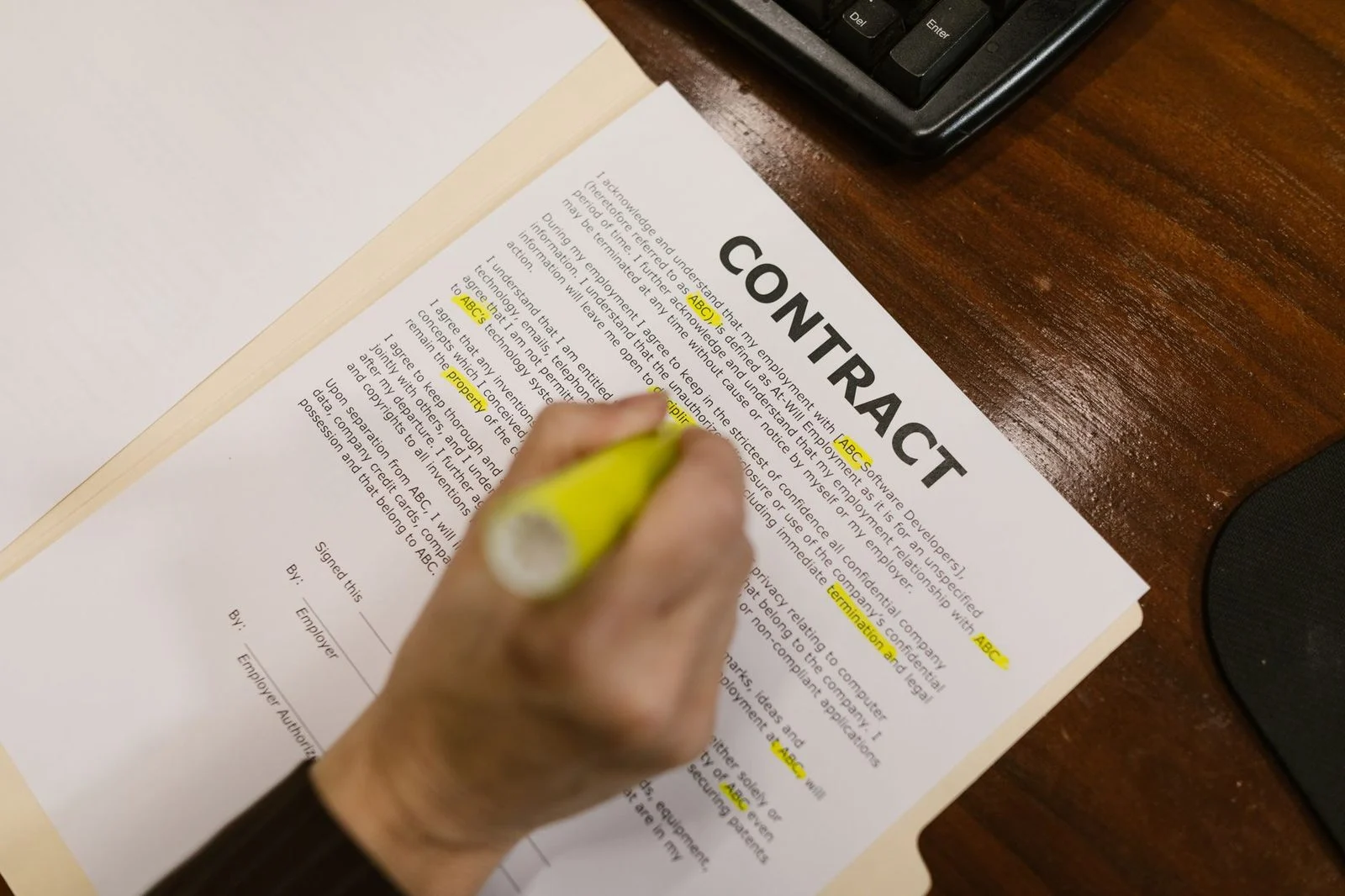
Contract disputes often begin when one side believes the other has not done what the agreement called for.
Most disputes start with something ordinary. A payment arrives late, a shipment comes up short, or the work never gets finished. The first question is always what the written terms actually promise. Check the dates, amounts, quantities, and scope of work. Many owners assume they had a deal and skip this step. That is where weak claims often start.
Material Breach vs. Minor Breach
Not every problem with a contract is the same, and how serious a problem is can matter when a dispute arises. A minor breach affects a smaller part of it.
The label matters because it decides what you may do next. Calling a breach “material” without support can expose you to a claim of your own. Whether a particular failure is material depends on the facts, including how much of the deal it affects and whether it can be fixed. Our material breach of contract discussion goes deeper into that line.
Read the Notice, Cure, and Dispute Terms First
Before you act, read the contract’s notice, cure, and dispute terms. These sections set the rules for your next move.
Look for these provisions:
- Notice requirements, including who must receive notice, the address, and how it must be delivered
- Cure periods, which give the other side time to fix the problem
- Termination rights and the steps needed to use them
- Governing law, venue, and any arbitration clause
- Attorney fee provisions
Many contracts require written notice in a specific form, such as certified mail to a listed address. An email to the wrong person may not meet that requirement. If you skip a required step, the other side can argue you did not follow the contract. That can weaken your position even when the breach is real. Keep a record of exactly how and when you sent each notice, and save the delivery receipts.
Written, Verbal, and Text Message Agreements
Many oral agreements can be enforced in Florida. A signed written record is easier to prove, though. Some agreements must be in writing to be enforced at all.
Florida’s statute of frauds requires a signed writing for certain agreements. These include an agreement that cannot be performed within one year of its making, and a lease for longer than one year (Fla. Stat. § 725.01). For a sale of goods priced at $500 or more, a signed record is generally required (Fla. Stat. § 672.201).
Text messages and emails can serve as evidence of an agreement and its terms. Save them in full, with dates and sender names. Don’t delete threads that may help prove the deal. A common mistake is relying on a handshake deal for a multi-year project. Our pages on verbal agreements and text message contracts cover these questions in more detail.
Deadlines: The Statute of Limitations
Florida law sets deadlines for filing lawsuits, and those deadlines can differ depending on whether a contract is written. The clock generally starts when the last element of the claim occurs (Fla. Stat. § 95.031).
Some events pause, or toll, the clock. The pendency of an arbitration on the same dispute tolls the period. So does a payment of part of the principal or interest on a written obligation (Fla. Stat. § 95.051). Talks alone are not among the tolling events the statute lists. Don’t assume ongoing negotiations have paused the deadline.
Construction claims carry separate timing. Claims tied to the design or construction of an improvement to real property have their own limits under § 95.11. Lien rights have their own deadlines too. Track each one separately, and don’t wait until the last months to act.
Not sure what your next step is?
Talk it through with our team — we can walk you through how a situation like yours is usually handled and what your options are.
Demand Letters, Notice to Cure, and Withholding Payment
A demand letter puts the breach in writing, cites the contract terms, and sets a deadline for a response. It also builds a record you can show later.
A useful demand letter states the facts plainly. It names the clause that was broken, the payment or performance owed, and the date by which the other side must respond. Keep the tone factual. An angry letter can be read back to you later.
Withholding payment can be a tool, but it carries risk. If the contract allows it and the breach supports it, withholding may be proper. If not, withholding can become a breach by you. For goods, a buyer who accepts them must notify the seller of a breach within a reasonable time after discovering it, or be barred from certain remedies (Fla. Stat. § 672.607). A written record of every step protects you whether or not the dispute reaches a courtroom.
Damages a Business Can Recover
Documents and other evidence play a central role in how a dispute over money is presented.
Attorney fees are a separate question. Attorney fee provisions in a contract can work in both directions, so the exact wording of the agreement often matters when a dispute reaches court. Florida law also requires the court to award a fee when a party knew or should have known that a claim or defense lacked factual or legal support (§ 57.105(1)). A sanctions motion must be served first, and the challenged paper can be withdrawn or corrected within 21 days (§ 57.105(4)).
Common Defenses to a Breach of Contract Claim
The other side often answers a breach claim with a defense. Each one turns on the contract language and the order of events.
If the defendant shows one of these, the claim can be weakened.
Evaluate defenses early. Pull the contract, the timeline, and every message. A defense that looks weak on paper can turn on one email or one missed notice.
Court or Arbitration: Choosing the Forum
If a valid arbitration clause covers the dispute, Florida law generally enforces it. The court decides whether an agreement to arbitrate exists and whether the dispute falls within it (Fla. Stat. § 682.02). A court may not refuse to order arbitration just because the claim lacks merit (Fla. Stat. § 682.03).
Federal law adds a similar rule for contracts involving commerce. Under the Federal Arbitration Act, a written provision in a contract involving commerce to settle by arbitration a controversy arising out of that contract shall be valid, irrevocable, and enforceable, save upon such grounds as exist at law or in equity for the revocation of any contract (Section 2 of the Federal Arbitration Act). If a suit is brought in a federal court on an issue referable to arbitration under a written agreement for arbitration, the court, on application of one of the parties, shall stay the trial until arbitration has been had in accordance with the agreement, provided the applicant is not in default in proceeding with that arbitration (Section 3 of the Federal Arbitration Act).
Venue is a separate question. Florida’s venue statute says actions shall be brought in the county where the defendant resides, where the cause of action accrued, or where the property in litigation is located (Fla. Stat. § 47.011). The statute does not apply to suits against nonresidents. For a Hillsborough County dispute, the facts decide which county fits.
Construction, Real Estate, and International Trade Contract Disputes
Construction, real estate, and international trade contracts each raise breach questions that follow their own rules.
A contractor who isn’t paid, or an owner facing a lien, needs to track those steps early.
In real estate, contracts for the sale of land and leases longer than one year must be in writing (§ 725.01). Breach questions often center on closing obligations, deposits, and notice terms.
Delivery terms, cross-border payment terms, and governing-law clauses often decide which rules apply. Ayala Law PA concentrates in construction, real estate, and international trade litigation, alongside its business and contract work.
If a customer or vendor has stopped performing on a deal you signed, you may have a claim worth reviewing, and our team can walk through the contract with you. Talk it through with our team — we can walk you through how a situation like yours is usually handled and what your options are.
Next Steps for Florida Business Owners
Read the contract, classify the breach, follow its notice terms, track deadlines, and choose the forum before you send a demand or file a claim. That order keeps your options open.
Consider the situation many owners face. A customer or vendor has stopped performing on a signed deal. You must decide whether to send a demand, withhold payment, or file a claim. Each choice carries risk, and the right order depends on the contract’s terms and dates.
Frequently asked questions
How long do I have to sue for breach of contract in Florida?
Florida generally allows five years for a written contract and four years for one that is not written. Some events can pause that clock, so check the timing early.
Is an oral contract enforceable in Florida?
Many oral agreements can be enforced. Some must be in writing, such as agreements that cannot be performed within one year.
Do I need to send notice before suing?
Many contracts require written notice in a set form. Check the notice terms before you act.
Where can a Hillsborough County business file a contract lawsuit?
Florida’s venue statute points to the county where the defendant resides, where the claim accrued, or where the property is located.
If a vendor or customer has stopped performing on a deal you signed, our team can talk through the contract and its dates with you. Call (305) 570-2208 or reach out at the Ayala Law PA contact page. Eduardo A. Maura is the lawyer responsible for this page. Ayala Law PA’s office is in Tampa, at 1646 W Snow Ave.



