
Short Answer: Can a Construction Deposit Be Recovered in Florida?
Yes, a construction deposit can often be pursued through a written demand, a breach of contract claim, or a fraud or misuse-of-funds claim. Which route fits turns on what the signed contract says about deposits, refunds and default, and on how the contractor used the money. Many disputes start the same way: the owner paid up front, the work stopped, and the money is unaccounted for.
This page is written for two readers. Owners who paid a deposit and have a stalled or unstarted project need to know their options. Contractors and subcontractors who hold a deposit and face a demand need to know what they owe and how to respond. Both sides start with the same step: a clear record of what was paid, promised and done.
Ayala Law PA focuses on business and construction disputes, including construction litigation and contract disputes. Eduardo A. Maura is the lawyer responsible for this page. Treat this page as general information, not advice on your own situation.
If a contractor kept your deposit and the work stopped, you may have a claim worth reviewing, and we can talk through your options with you. Talk it through with our team — we can walk you through how a situation like yours is usually handled and what your options are.

How Much Upfront Payment Is Usual, and What the Contract Should Say
Upfront payments are common in construction. The signed contract sets the amount and timing, not a single rule for every job. Start by reading the payment schedule, the milestones that trigger each payment, and what each payment covers.
A payment tied to a clear milestone is easier to trace than a lump sum with no stated purpose. If a contractor asks for a large sum at signing, ask what it pays for: materials, permits or labor. Get that answer in writing.
Before you pay, review these terms in the contract:
- The deposit amount and payment schedule
- Refund conditions and cancellation terms
- How change orders are priced
- Default and notice provisions
Each item affects what you can recover later. A vague schedule or a missing refund term makes a dispute harder to prove.
Document the Payment and the Project Status
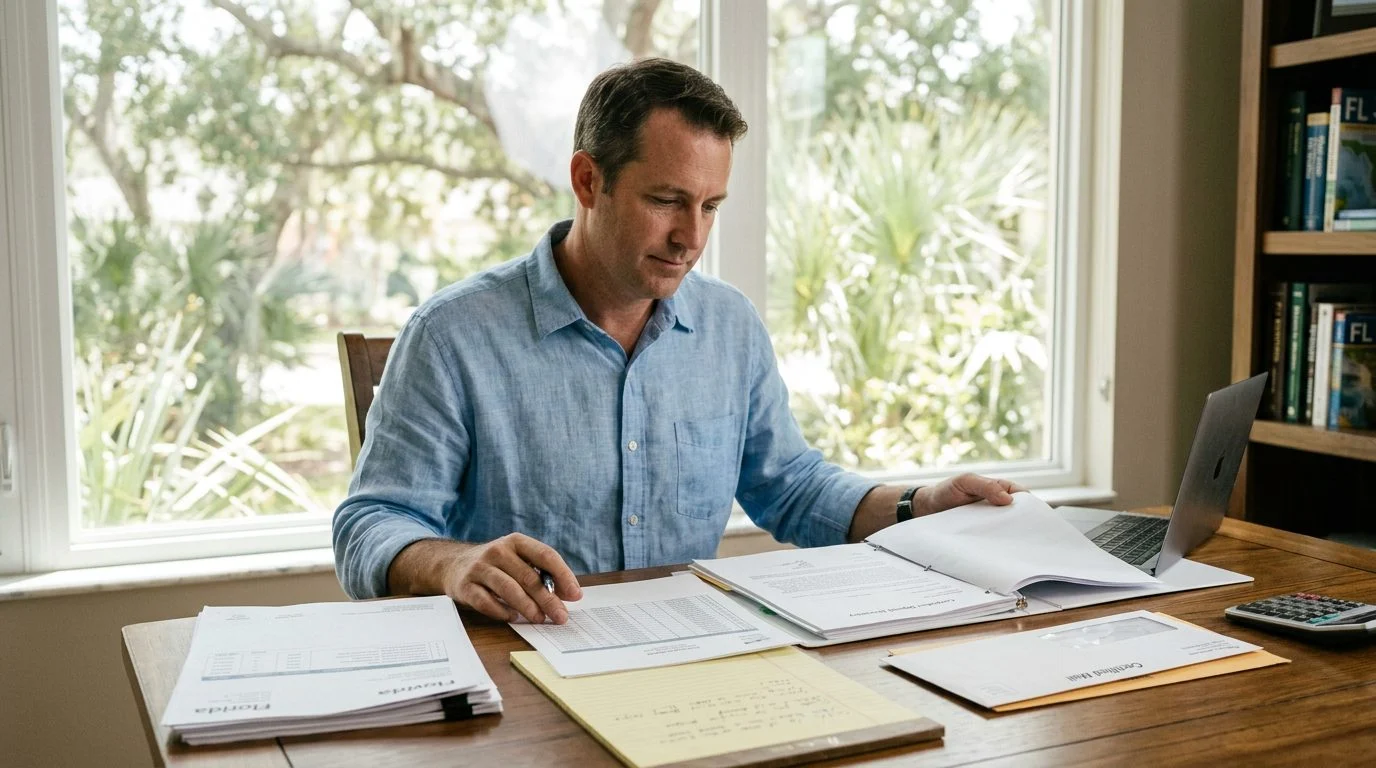
Keep proof of every payment, because a demand or lawsuit starts with the money trail. Save cancelled checks, bank transfer records, card statements, receipts and invoices. Write the project name and address on each one.
Also keep the signed contract, change orders, permits and plans. Save texts and emails that describe the scope, the schedule or any promise about the work. A promise made in a text can matter as much as a line in the contract.
Record the project’s status as it happens. Take dated photos. Keep a simple log of visits, missed start dates and finished work. Note who was on site and what was said.
This record does three things. It shows what was paid and when. It shows what the contract required and what the contractor did. It gives you concrete facts for a demand letter or a court filing. Gaps in the record are hard to fill later, so start now.
Check the Contract’s Refund, Default and Notice Terms
A refund clause usually ties the return of a deposit to a specific event. Common triggers are cancellation, failure to start by a stated date, or work not performed. Read that clause closely, because many disputes turn on one date or one trigger.
Many contracts also include default and cure provisions. These often require written notice of the problem and a chance to fix it before the owner can terminate or demand a refund. Skipping that step can give the contractor a defense.
Notice clauses often say how and where notice must go, such as by certified mail to a stated address. Follow the method the contract names, and keep a copy of what you sent.
A contract with no clear refund term does not end your options. A claim can rest on breach of the contract itself. Florida courts can refuse to enforce a term as unconscionable, but only when it is both procedurally and substantively unfair. See Basulto v. Hialeah Automotive.
Deadlines matter. Florida law generally requires a claim based on the design, planning, or construction of an improvement to real property to be filed within 4 years, measured from the earliest of the date the authority having jurisdiction issues a temporary certificate of occupancy, a certificate of occupancy, or a certificate of completion, or the date construction is abandoned if it was never completed; when the claim involves a latent defect, the time instead runs from when the defect is discovered or should have been discovered with the exercise of due diligence, and in any event the action must be commenced within 7 years after the earliest of those dates. A contract clause that sets a shorter time to sue is void under § 95.03.
Step One: Send a Written Demand
A written demand letter is usually the first formal step before a lawsuit. It tells the contractor what went wrong and what you want. Include these items:
- The contract date and payment details
- The default or problem
- The amount requested
- A response deadline
- The notice method the contract requires
A demand creates a clear record and can open a settlement talk. Under § 90.408, an offer to compromise a disputed claim cannot be used to prove liability or the claim’s value.
A demand does not force payment. If the contractor ignores it or refuses, the next step turns on which claim fits. Owners often weigh one practical question: does the amount justify the time and cost of formal action?
Breach of Contract, Fraud and Misuse of Construction Funds
A breach of contract claim is often the starting point when a contractor does not perform as agreed. That includes failing to do the work, doing defective work, or walking away from the job.
A fraud claim fits when a contractor takes money on a false promise, such as a claim that materials were bought when they were not. Under Butler v. Yusem, justifiable reliance is not a necessary element of fraudulent misrepresentation. As the court explained in Butler v. Yusem, justifiable reliance is not a necessary element of fraudulent misrepresentation.
Unjust enrichment has limits. Under Williams v. Johnson, an express contract covering the same subject matter means claims from that relationship will not support unjust enrichment. An owner may not be able to rely on that theory alongside the contract.
If the contractor is a company, the claim may need to reach its owners. Under Wurtzebach v. Flooring Depot FTL, a corporate veil is pierced only on proof of improper conduct, such as using the company to mislead or defraud creditors.
Not sure what your next step is?
Talk it through with our team — we can walk you through how a situation like yours is usually handled and what your options are.
Florida Construction Recovery Fund
Those rules apply to each claim.
The fund is not a lawsuit. Its payments follow their own eligibility rules, so an owner should not treat it as a replacement for the contract claim. Keep your contract and payment records ready either way.
License status matters here. The Construction Industry Licensing Board publishes Florida contractor licensing requirements and license verification. Confirm a contractor’s license status before you rely on any fund or defense.
Small Claims, County Court or Circuit Court
The right court depends on the amount in dispute and the type of claim. Florida uses small claims, county court and circuit court, and each has its own procedures.
Small claims is built for simpler disputes and generally moves faster with less formal discovery. Larger or more complex disputes usually go through county or circuit court, with formal pleadings and discovery.
Venue is set by statute. Under Fla. Stat. § 47.011, actions are brought only in the county where the defendant resides, where the cause of action accrued, or where the property in litigation is located. This section shall not apply to actions against nonresidents. For a Hillsborough County project, the county where the work happened may be one option under that rule.
Check the contract for arbitration or mediation terms. Under § 682.02, a written agreement to arbitrate existing or later disputes is generally enforceable. Under § 44.102, a court must refer to mediation, upon request of one party, any filed civil action for monetary damages, provided the requesting party is willing and able to pay the costs of the mediation or the costs can be equitably divided between the parties, unless an exception applies.
When the Contractor Is the One Asking
Keep a clear ledger that shows each payment and expense. The contract’s refund and default terms set the frame.
A contractor who gets a demand should read the refund and default terms before responding. A written response that lays out the accounting helps document the dispute.
Timing matters on both sides of the job.
Legal Fees, Prevailing-Party Clauses and Cost
Florida follows the American Rule. Each side generally pays its own attorney’s fees unless a contract or statute provides otherwise, as stated in Price v. Tyler. That default shapes how owners and contractors weigh a claim.
Many construction contracts include a prevailing-party fee clause. Under § 57.105, if a contract lets a party recover fees for enforcing it, the court may allow reasonable fees to the other party when that party prevails. The clause’s wording controls whether it applies.
Fee clauses cut both ways. Filing fees, service and other costs also add up.
Fees and costs depend on the facts of each matter, and Ayala Law PA explains them directly with you.

Bring Your Deposit Question to Ayala Law PA
A paid deposit with no finished work is worth reviewing with the contract in hand. Start with the refund terms and your payment records.
How do I recover deposit from contractor Florida?
Start by documenting each payment and reading the contract’s refund terms, then send a written demand. If the contractor does not respond, a breach of contract claim may move forward in small claims, county court or circuit court.
Is it normal to give a contractor a deposit?
Upfront payments are common in construction. The signed contract sets the amount and the payment schedule.
How long do I have to sue?
The deadline turns on the type of claim and the timing of the work. Florida sets filing deadlines by statute, including § 95.11.
If you paid a deposit and the contractor stopped work, you may have a claim worth discussing. We can go over your signed contract, your payment records and the options that may fit your situation. Call (305) 570-2208 or contact us online.
Ayala Law PA’s only office is at 1646 W Snow Ave, Tampa, Florida. The firm serves owners and businesses in Tampa, Hillsborough County and the Tampa Bay area.
Eduardo A. Maura is the lawyer responsible for this page. This page is general information and does not promise any result.



