
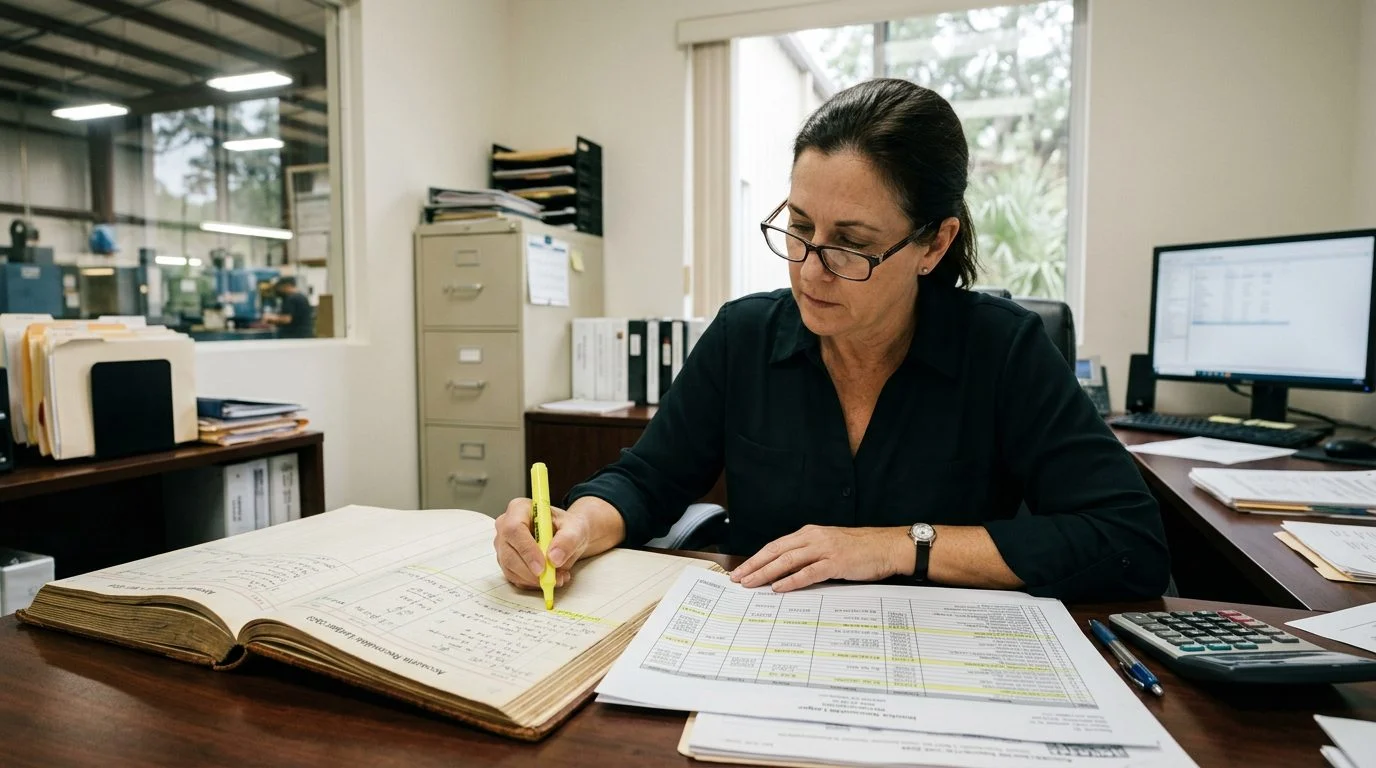
You signed the deal and closed the sale, but the payments or numbers now don’t match what you expected. A business sale agreement dispute is a disagreement between buyer and seller about what the signed contract requires after closing. In most cases, the written agreement decides which claims you have and how they must be raised. Ayala Law PA, based in Tampa, focuses on commercial and contract disputes, including these sale disputes.
What a Business Sale Agreement Dispute Involves
A business sale agreement dispute arises when buyer and seller read the signed deal differently after closing. Most of these deals take one of two forms. In an asset purchase, the buyer takes the business’s assets. In a stock or membership interest purchase, the buyer takes ownership of the company itself. Some deals also involve a holding company or a guarantor who signs to back the buyer’s obligations.
The signed agreement usually controls what each side owes. Exhibits, schedules, and amendments often matter as much as the main document. Earlier papers, such as a letter of intent, can also become evidence of what the parties meant.
This page is written for three kinds of readers in Tampa and Hillsborough County:
- Sellers still waiting on an unpaid balance.
- Buyers who believe the business was misrepresented before closing.
- Owners caught in a disagreement after the keys changed hands.
If a buyer has not paid what the closing papers promised, or a warranty claim has surfaced since closing, our team can review your signed agreement with you. Talk it through with our team — we can walk you through how a situation like yours is usually handled and what your options are.

Common Disputes Under Business Sale Agreements
Most sale disputes center on money owed after closing, promises about the business, or steps the contract required before payment. Common examples include:
- Purchase price adjustments. Disagreements over inventory counts, receivables, or the final working capital calculation.
- Earnouts and deferred payments. Disputes over how revenue or EBITDA targets were calculated, and whether the buyer’s operation affected those numbers.
- Breach of representations and warranties. Claims that financial statements, licenses, customer contracts, or litigation history were inaccurate or incomplete.
- Undisclosed liabilities. Tax, regulatory, or environmental problems found after closing.
- Restrictive covenants. Non-compete, non-solicitation, or transition duties one side says the other broke.
- Escrow and indemnification. Disputes over who may draw money from a holdback or escrow account.
- Failed closings. Conditions that were never satisfied, including financing or third-party consents.
Each category turns on different contract language. A warranty claim is not decided the same way as a dispute over an earnout formula.
How a Sale Agreement Dispute Typically Moves Forward
A typical dispute moves from document review to a written demand, then to negotiation, and only then to the forum the contract names. Start with the agreement’s exact words. Florida courts do not favor treating a contract term as a condition precedent, meaning a step that must happen first. Courts treat a term that way only when plain language or necessary implication requires it.
- Review the paper. Read the purchase agreement, letter of intent, disclosure schedules, closing statements, and amendments. Look for notice requirements, cure periods, and dispute resolution clauses.
- Build the timeline. Map payments, communications, and due diligence materials to show what each party knew and when.
- Send a written demand. The demand should cite the provisions at issue and state the relief requested.
- Negotiate or mediate. When one party asks, a court must refer a filed civil action for money damages to mediation, unless a listed exception applies. The requesting party must be willing and able to pay, or the costs must be equitably divided between the parties. See § 44.102.
- If the contract allows a lawsuit, venue generally lies where the defendant resides, where the claim accrued, or where the property is located, under § 47.011. This rule does not apply to actions against nonresidents.
- Enforce. Collecting on a judgment or award depends on the facts of each case and the assets involved.
What to Expect on Timing and Next Steps
Timing depends on the facts, including the dispute clause, the volume of records, and how quickly the other side responds. Start early on deadlines, because a sale contract can carry its own clock.
- Statutory periods vary by claim. For some claims, including actions founded on fraud, § 95.11 sets a four-year period.
- Notice windows can be short. Many agreements require written notice within a set period for indemnification claims. The date you found a problem can matter as much as the amount in dispute.
Keep your conduct consistent, too. Under Florida case law, a voidable deal can be ratified when the party entitled to cancel it fails to act after learning the key facts. That is a general rule. The circumstances decide how it applies.
A first working meeting usually covers the agreement, the closing package, the claimed loss, and the documents still needed.
Documents to Gather Before You Call
Gather the signed agreement and every paper that shows how the price and closing numbers were built. Keep originals as you received them. Bring these items:
- The signed purchase agreement with all exhibits, schedules, and amendments.
- Any letter of intent, term sheet, or side agreement that shaped the final deal.
- Closing statements, funds flow memos, and the final balance sheet or working capital calculation.
- Financial statements, tax returns, and general ledgers for the periods covered by the representations.
- Written notices, emails, and texts about the dispute, including demand letters already sent or received.
- Escrow agreements, holdback records, and payment history under earnouts or installment notes.
- Formation documents and any consents or licenses that transferred at closing.
Why Ayala Law PA for Tampa Sale Agreement Disputes
Ayala Law PA is located at 1646 W Snow Ave, Tampa, FL 33606. The firm serves Tampa, Hillsborough County, and the surrounding Tampa Bay area from that office.
The firm focuses on business litigation, commercial litigation, contract disputes, shareholder disputes, construction litigation, real estate litigation, and international trade litigation in Florida courts and arbitration.
Eduardo A. Maura is the responsible lawyer for this page. Our team includes support staff who organize document sets, case files, and correspondence. Sale disputes are document-heavy, so that work matters. The team can help build the chronology, organize schedules and closing statements, and prepare demand correspondence. If a matter may be better handled by another lawyer or firm, the firm will say so.
Not sure what your next step is?
Talk it through with our team — we can walk you through how a situation like yours is usually handled and what your options are.
Common Questions About Business Sale Agreement Disputes
Most answers start with the signed agreement. These short answers are general guidance.
Can I sue if the seller misrepresented the business?
Possibly. The agreement’s warranty, indemnity, and notice terms decide which claims are available.
Do I have to go to arbitration?
Only if the agreement requires it. Some contracts call for mediation first.
What if the buyer has not paid an earnout?
Review the calculation method, reporting duties, and any dispute process in the contract.
Can an escrow be released without the other side agreeing?
The escrow agreement and the purchase agreement set the release conditions.
Will a demand letter be enough?
Sometimes it resolves the issue. Other times it builds the record needed for the next step.
How are fees handled?
Fee terms are discussed directly with the firm when you call (813) 414-5715.

Talk With Ayala Law PA About Your Sale Agreement Dispute
If the buyer has not paid what the closing papers promised, or a warranty claim surfaced after closing, bring your signed agreement and closing papers to the conversation. Request a case evaluation through the contact page, or call (813) 414-5715 to discuss your agreement with the Tampa office at 1646 W Snow Ave, Tampa, FL 33606.



