

Does a business deal need to be in writing in Florida? Florida generally enforces oral and informal business agreements. A few categories, however, must be in a signed writing before a court will enforce them.
The Short Answer: Most Business Deals Do Not Have to Be in Writing
Whether a business agreement must be in writing depends on the type of agreement involved. A spoken agreement can be enforced when both sides agreed and the key terms can be proven. Under Florida’s sale-of-goods rules, a contract may be made in any manner sufficient to show agreement, including conduct by both parties that recognizes the deal.
Proof is the real problem. An unwritten agreement can raise questions about what was agreed and how it can be proven. Owners who rely on memory often disagree later about price, timing or the scope of the work. Some agreements fall under the statute of frauds and must be in a signed writing. The next section explains that rule.
For the wider picture, read our contract dispute guide for Tampa-area businesses.
If you agreed to a deal by handshake, text or email and the other side now denies it, your messages and records matter, and our team can review them with you. Talk it through with our team — we can walk you through how a situation like yours is usually handled and what your options are.
What the Florida Statute of Frauds Requires Under Section 725.01
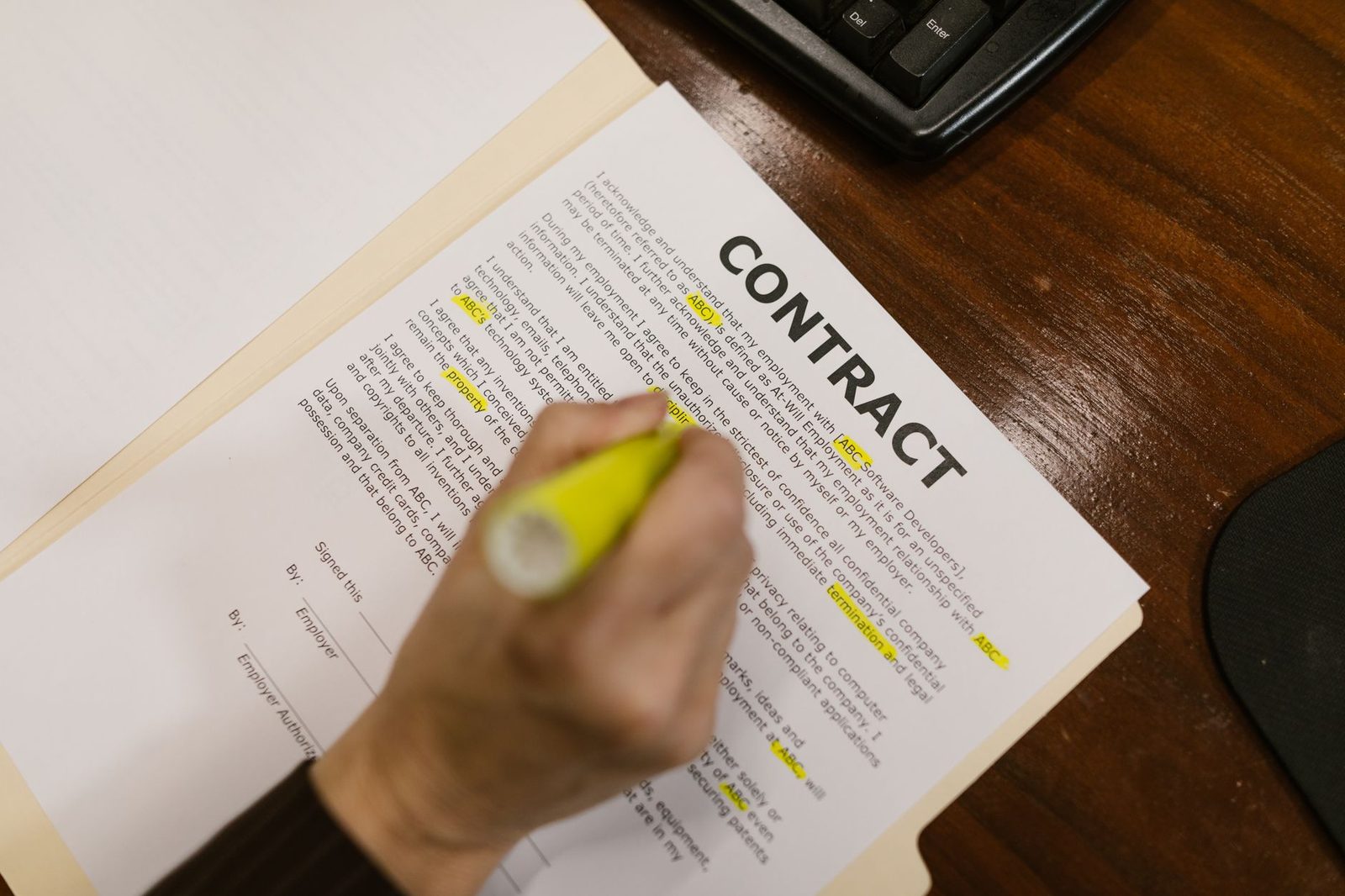
It says certain promises cannot be enforced unless they are in writing. Under Fla. Stat. § 725.01, the agreement, or a note or memorandum of it, must be in writing and signed by the party to be charged. That is the person you are trying to hold to the deal, or someone that person lawfully authorized to sign.
The statute reaches several kinds of agreements. The one that matters most for everyday business is any agreement that is not to be performed within one year of being made. Leases longer than one year fall under the same rule. The statute also covers special promises to answer for another person’s debt, default or miscarriage. It also covers contracts for the sale of land.
The writing does not have to be a formal contract. A note or memorandum can meet the rule, as long as the party to be charged signed it.
Business Agreements That Generally Need a Signed Writing
Several common business deals need a signed writing in Florida. Check each deal against this list before you rely on an oral version.
- Real estate transfers. Under Fla. Stat. § 689.01, an interest in real property generally must be transferred by a written instrument. That instrument must be signed in the presence of two subscribing witnesses. Leases of real property do not need subscribing witnesses under that section.
- Long-term leases and multi-year promises. Any lease longer than one year falls under § 725.01. So does any deal that cannot be finished within one year.
- Promises to cover a company’s debt. A special promise to answer for another person’s debt or default must be in writing under the same statute. Owners often make these promises casually, so take them seriously.
- Goods priced at $500 or more. Under Fla. Stat. § 672.201, a sale-of-goods contract at that price is not enforceable unless a record shows a contract was made. The record must be signed by the party you are trying to hold to it. A record is not invalid just because it leaves out or misstates a term. It is enforceable only up to the quantity the record shows.
When Oral Deals, Implied Contracts and Partial Performance Can Still Be Enforced
Oral deals outside the writing categories can still be enforced. Conduct can also show that a deal existed. The writing categories are the exceptions, not the rule.
A deal that can be fully performed within one year generally falls outside the one-year rule in § 725.01. A single project or one delivery is a common example.
Conduct can create a contract. Under § 672.204, a sales contract can be shown through conduct by both parties that recognizes it. Picture a supplier who keeps filling orders, sends invoices and gets paid, with no written agreement. That pattern is the kind of evidence that can matter.
The goods writing rule also has listed exceptions. Under § 672.201, an unwritten goods contract can still be enforced in some cases. Examples include when the party you are trying to hold to it admits in court that a contract was made, and when goods have been received and accepted.
Missing terms do not always kill a deal. Under § 672.204, a contract does not fail just because one or more terms are left open. That applies when the parties meant to make a contract and a reasonably certain basis exists for an appropriate remedy.
How Emails, Texts and Electronic Signatures Can Count as a Writing
Electronic messages can serve as a writing in some cases. Under Fla. Stat. § 668.004, an electronic signature can sign a writing. It has the same force and effect as a written signature, unless another law provides otherwise.
Email confirmations between businesses carry special weight. Under § 672.201, between merchants, a written confirmation can satisfy the writing rule for goods. That works if the receiving party had reason to know its contents. The receiver must object in writing within 10 days after receiving it, or the confirmation can count against them.
Whether a short text or email meets the statute depends on the facts. A message such as “sounds good, let’s do it” may be disputed. The terms it contains and the messages around it both matter.
Keep organized records. Save emails, texts, drafts, invoices and payment records. They show what was discussed, what was agreed and how each side acted.
Mistakes That Turn an Unwritten Deal Into a Dispute
Most disputes over unwritten deals start with a few avoidable habits. The most common ones involve timing, drafts and changes.
- Verbal promises for multi-year work. A promise that cannot be finished within one year raises the issue under § 725.01.
- Treating an unsigned draft as final. If one side never signs a term sheet, the other side may dispute that it was ever final.
- Changing terms by phone. If the written version stays the same while the real deal changes, the records no longer match.
- Waiting too long. Delay makes proof harder. Florida’s limitations statute, § 95.11, sets filing deadlines that depend on the form of the deal, so review it early.
Quick Answers
Does a lease longer than one year have to be in writing in Florida? Yes. Under Fla. Stat. § 725.01, no action may be brought upon any contract for the sale of lands, tenements or hereditaments, or upon any lease thereof for a period longer than a year, unless the agreement or promise upon which such action shall be brought, or some note or memorandum thereof, is in writing and signed by the party to be charged therewith.
Does a personal promise to cover a company’s debt need to be in writing? Yes. A special promise to answer for another person’s debt or default must be in writing under § 725.01.
Is a handshake deal binding in Florida? It can be, if the parties agreed and the key terms can be proven. Certain categories still require a signed writing.
If you agreed to a deal by handshake, phone, email or text and the other side now denies it, your records and messages matter. Ayala Law PA focuses on business litigation, commercial and contract disputes, shareholder disputes, construction litigation and real estate litigation. The firm, whose office is in Tampa at 1646 W Snow Ave, Tampa, represents businesses in Tampa, Brandon, Riverview, Plant City, Temple Terrace and across Hillsborough County. To talk through your deal, call (305) 570-2208 or contact us. Eduardo A. Maura is responsible for this page.



