
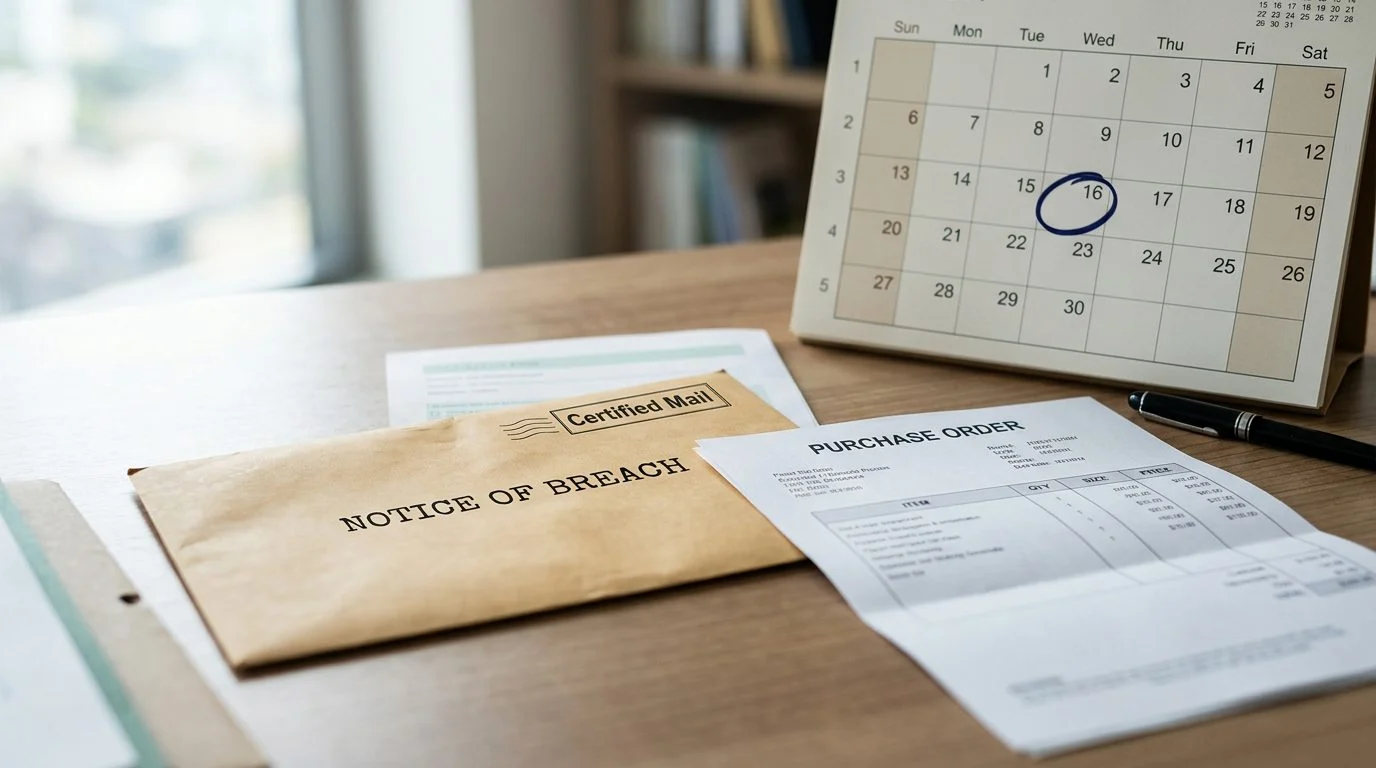
Contract dispute mediation in Florida can settle an equipment fight without a trial. The first steps, though, happen on paper and in the first weeks after a problem. If a machine failed, arrived late or didn’t match the order, Florida’s sale-of-goods law sets the rules, and a missed notice can cost you the claim. This page explains those rules, where mediation fits, and what to gather now. Eduardo A. Maura is the responsible lawyer for this page. Ayala Law PA, with its office at 1646 W Snow Ave in Tampa, concentrates on commercial and business litigation for companies in Tampa, Hillsborough County and the wider Tampa Bay region, and Eduardo A. Maura is the lawyer responsible for this page.
What Equipment and Sale-of-Goods Disputes Cover in Florida
A sale-of-goods dispute is a disagreement over goods a buyer bought and a seller delivered. Florida’s Chapter 672 scope rules apply to transactions in goods. In a mixed deal, the chapter can cover the whole transaction if the goods are the main part of it.
Under Florida’s merchant definition, a merchant deals in goods of that kind or by occupation holds itself out as having special knowledge or skill of the practices or goods involved, or is a person to whom such knowledge or skill may be attributed by employing an agent, broker, or other intermediary who by occupation holds himself or herself out as having such knowledge or skill. Typical fact patterns include:
- Machinery that doesn’t perform as promised
- The wrong model or quantity shipped
- Delivery after the agreed date
- A seller who refuses to honor a written warranty
The Florida Supreme Court holds that an oral contract still needs an offer, acceptance, consideration and enough detail on its essential terms (St. Joe Corp. v. McIver). We handle these matters as commercial and contract litigation, and mediation is one route to resolution.
If a machine you bought has failed or a delivery arrived short, you may have a claim, and our team can walk you through the notice timeline. Talk it through with our team — we can walk you through how a situation like yours is usually handled and what your options are.
Warranty Claims: Express, Implied and Disclaimed
A warranty is a seller’s promise about the goods.
An express warranty comes from a statement of fact, a description, or a sample or model that is part of the deal (Fla. Stat. 672.313). The seller doesn’t need words like “warrant” or similar formal terms. A plain opinion or praise of the goods usually doesn’t create one.
Two implied warranties also matter. If the seller at the time of contracting has reason to know any particular purpose for which the goods are required, and the buyer relies on the seller’s skill or judgment to select or furnish suitable goods, an implied warranty that the goods shall be fit for that purpose applies (Fla. Stat. 672.315), unless it is excluded or modified under the next section.
Disclaimers start many fights. Words like “as is” usually exclude implied warranties, unless the circumstances indicate otherwise (Fla. Stat. 672.316).
Nonconforming Delivery, Cure, Rejection and Acceptance
Once you accept goods, your options narrow, so timing matters. Acting in a way that is inconsistent with the seller’s ownership can also count as acceptance, but if that act is wrongful as against the seller, it counts as acceptance only if the seller ratifies it. Fla. Stat. § 672.606 reads: “(c) Does any act inconsistent with the seller’s ownership; but if such act is wrongful as against the seller it is an acceptance only if ratified by her or him.”
The notice rule is the trap buyers miss most often. The duty to notify the seller of a breach comes from a separate section, the sale-of-goods notice rule. If you don’t notify the seller within a reasonable time after you discover or should have discovered a breach of goods you have accepted, you will be barred from any remedy (sale-of-goods notice rule). Acceptance doesn’t by itself end other remedies, but it doesn’t excuse notice either. You also still pay the contract rate for goods you accepted.
Sellers have rights too. A seller whose nonconforming delivery is rejected may notify you it intends to cure and make a conforming delivery within the contract time (Fla. Stat. 672.508).
Put the defect in writing early. A dated email that names the problem and the fix you want is a stronger record of notice. Phone calls and informal texts leave a thin record.
How a Dispute Typically Unfolds
Most equipment disputes move through four stages: document review, written notice, negotiation, and then mediation or a lawsuit.
- Review the paperwork. Gather the contract or purchase order, warranty terms, delivery receipts, inspection notes, repair invoices and every written message with the seller.
- Send written notice. Name the defect or delay, state what you need, and keep proof that you sent it.
- Negotiate. Common outcomes include a repair, a replacement, a credit or a payment change.
- Mediate or sue. If talks stall, the matter may go to mediation, court or arbitration, depending on the contract.
Time limits are the deadline to track. Florida law sets four years for an action on a contract not founded on a written instrument, including the sale and delivery of goods. Fla. Stat. § 95.11 also lists “a legal or equitable action founded on fraud” among the actions it addresses (Fla. Stat. § 95.11). Which period applies depends on how the deal was made, so check early. Timing varies with the contract, the court’s calendar and whether the parties settle.
Contract Dispute Mediation in Florida for Equipment Disagreements
Mediation gives both sides a structured chance to settle an equipment dispute with a neutral mediator’s help. Mediation is a negotiation, so the outcome depends on what the parties agree to.
The requesting party must be able to pay the costs, or the costs must be split fairly. Debt collection cases and cases where the parties have agreed to binding arbitration are exceptions to mediation referral. Florida court mediation materials describe how certified mediators work, including their conduct and confidentiality duties.
Mediation communications are protected. A participant generally can’t share them outside the mediation (Fla. Stat. 44.405). A signed written settlement is different. It isn’t confidential unless the parties agree otherwise, so read the terms carefully before you sign.
Mediation tends to fit equipment disputes where you still need the seller. Examples include an ongoing supplier, a repair-or-replace fix, a disputed acceptance test, or a payment or credit plan. Bring a dated timeline of the defect or late delivery, the purchase and warranty papers, repair invoices, downtime records and the money at stake.
Why Businesses Work With Ayala Law PA on These Disputes
Ayala Law PA focuses its practice on business litigation, commercial litigation, contract disputes, shareholder disputes, construction litigation, real estate litigation and international trade litigation. The firm handles these matters in Florida courts and arbitration.
- Office: 1646 W Snow Ave, Tampa, Florida.
- Service area: businesses in Tampa, Hillsborough County, Brandon, Riverview, Plant City, Temple Terrace and the Tampa Bay area.
- Responsible lawyer for this page: Eduardo A. Maura.
- Support: our team organizes deadlines, records and communications from the first intake.
Our approach is practical. We map the notice dates first, then decide whether negotiation, mediation or a lawsuit fits the facts.
Not sure what your next step is?
Talk it through with our team — we can walk you through how a situation like yours is usually handled and what your options are.
Frequently Asked Questions
How long do I have to bring an equipment claim in Florida?
For a contract not founded on a written instrument, including the sale of goods, Florida law sets four years. Notice to the seller can be required sooner under the sale-of-goods notice rule.
Do I have to go to court?
Many business disputes settle through negotiation or mediation.
Can I reject equipment I already accepted?
Generally, acceptance ends the right to reject, but it doesn’t by itself end other remedies.
Does “as is” language remove every warranty?
“As is” usually excludes implied warranties unless the circumstances indicate otherwise (Fla. Stat. 672.316). A written promise about the goods can still create an express warranty (Fla. Stat. 672.313).
What does a case evaluation cost?
Fees are discussed directly with you, and the firm does not promise any result.
Talk With Ayala Law PA About Your Equipment Dispute
If a machine you bought has failed or a shipment arrived short, a reasonable-time notice clock may already be running. To book a case evaluation, call Ayala Law PA at (305) 570-2208 or send your details through the contact form. We’ll review your contract, your notice timeline and your options under Chapter 672 with you.



