
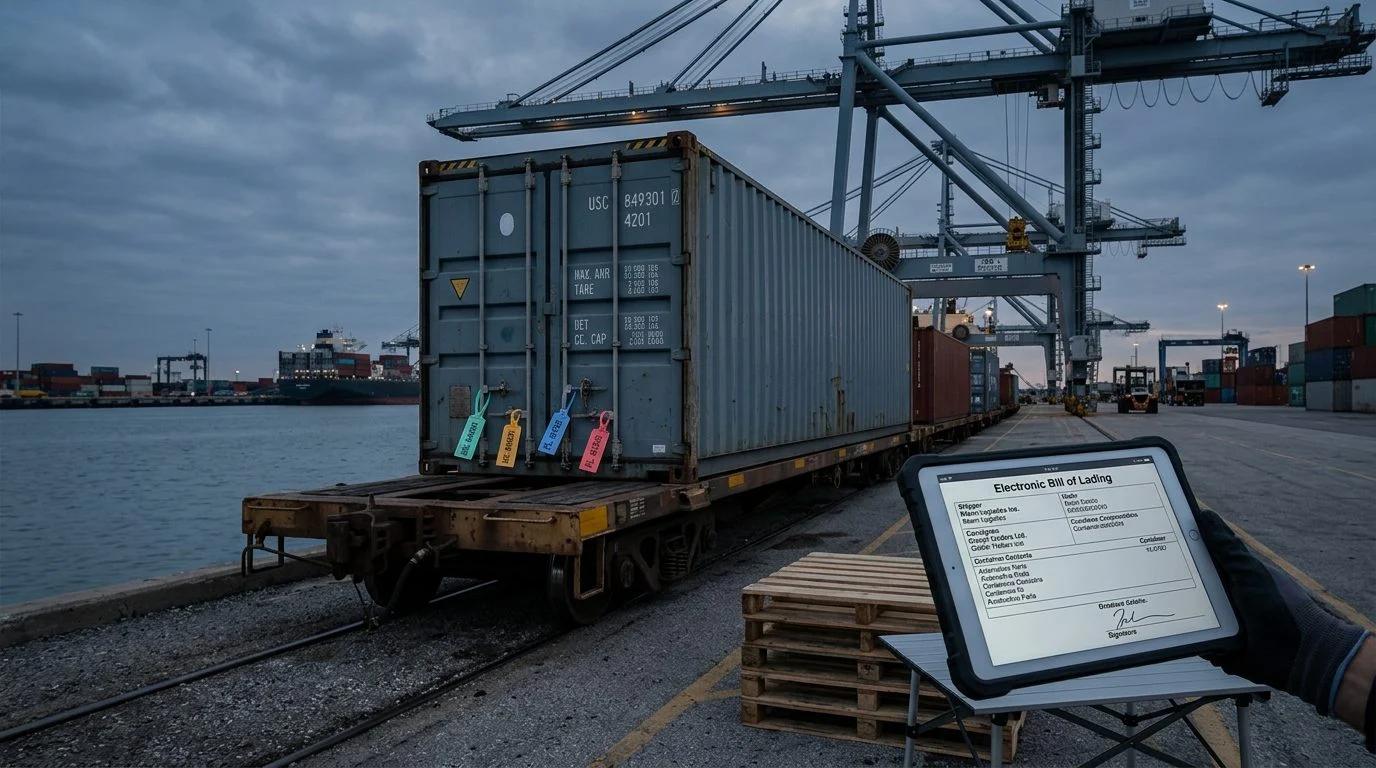
International Trade Litigation in Florida
International trade litigation is a legal fight over a business deal that crosses a border. It usually involves unpaid invoices, broken supply or distribution contracts, or goods that don’t match the order. In Florida, these disputes can land in state court, federal court or arbitration, and the contract often decides which one.
Ayala Law PA focuses on business litigation, including commercial, contract, shareholder, construction and real estate disputes, along with international trade litigation. Eduardo A. Maura is the responsible lawyer. The firm’s only office is at 1646 W Snow Ave, Tampa, Florida. The firm serves businesses in Tampa Bay and Hillsborough County from its Tampa office.
If a foreign buyer has stopped paying or a cross-border contract has broken down, you may have a claim worth reviewing. Reach out to Ayala Law PA to talk through your dispute. Talk it through with our team — we can walk you through how a situation like yours is usually handled and what your options are.

What is international trade litigation?
International trade litigation is a dispute over a commercial deal that involves a party or payment outside the United States, or goods that move across a border. The claims look a lot like domestic contract claims. The difference is that foreign parties, foreign payment terms and cross-border shipping add extra questions.
Common examples include:
- A foreign buyer that refuses to pay an invoice for goods it received.
- A distribution or agency agreement that one side ends early.
- A seller and buyer who disagree about quality, quantity or delivery.
- Disputes over letters of credit and other payment instruments.
- Customs and tariff disagreements that affect the price or terms of a deal.
Each of these starts with the contract. The written terms, the forum clause and the choice-of-law clause often shape the whole case.
Which forum hears a cross-border dispute?
A cross-border dispute usually goes to one of three places: a Florida state court, a federal district court, or an arbitrator. The contract and the parties’ locations determine which path is available.
Florida state courts and where a case is filed
Florida has a venue rule that limits where many cases can be filed. Fla. Stat. § 47.011 says actions shall be brought only in the county where the defendant resides, where the cause of action accrued, or where the property in litigation is located. The statute states that it does not apply to actions against nonresidents.
Florida courts also have reach over out-of-state businesses. Under Fla. Stat. § 48.193, a person who operates or conducts a business in Florida can be subject to Florida’s courts for claims arising from that business. The same statute covers a party that breaches a contract in Florida by failing to perform acts the contract requires in Florida. A defendant with substantial and not isolated activity in Florida can also be subject to Florida’s courts.
Federal court and arbitration
Federal law gives parties tools to move a dispute into arbitration. A party aggrieved by the alleged failure, neglect, or refusal of another to arbitrate under a written agreement for arbitration may petition any United States district court which, save for such agreement, would have jurisdiction under title 28, in a civil action or in admiralty of the subject matter of a suit arising out of the controversy between the parties, for an order directing that such arbitration proceed in the manner provided for in such agreement, as set out in Section 4 of the Federal Arbitration Act. Five days’ written notice of that application must be served on the party in default.
Under federal arbitration law, when a suit is brought in a court of the United States on an issue referable to arbitration under a written arbitration agreement, the court, once satisfied that the issue is referable to arbitration under that agreement, shall on application of one of the parties stay the trial of the action until the arbitration has been had in accordance with the agreement’s terms, provided the party applying for the stay is not in default in proceeding with the arbitration. The court must be satisfied that the issue falls under a written arbitration agreement. The party asking for the stay must not be in default in proceeding with the arbitration.
How are arbitration clauses enforced?
A written arbitration clause is generally valid and enforceable. Under Section 2 of the Federal Arbitration Act, a written provision in any maritime transaction or a contract evidencing a transaction involving commerce to settle by arbitration a controversy thereafter arising out of such contract or transaction, or the refusal to perform the whole or any part thereof, or an agreement in writing to submit to arbitration an existing controversy arising out of such a contract, transaction, or refusal, shall be valid, irrevocable, and enforceable, save upon such grounds as exist at law or in equity for the revocation of any contract or as otherwise provided in chapter 4. The exception is grounds that exist at law or in equity to revoke any contract.
Florida follows a similar rule. Under Fla. Stat. § 682.02, an agreement in a record to submit controversies to arbitration is valid, enforceable and irrevocable. Under Fla. Stat. § 682.02, an agreement contained in a record to submit to arbitration any existing or subsequent controversy arising between the parties to the agreement is valid, enforceable, and irrevocable, except upon a ground that exists at law or in equity for the revocation of a contract.
The statute also splits the work between judge and arbitrator. The court decides whether an arbitration agreement exists or whether a controversy is covered by it. The arbitrator decides whether a condition before arbitration has been met and whether the contract with the arbitration clause is enforceable. If a party challenges whether the clause applies, the arbitration can continue while the court decides the issue, unless the court orders otherwise.
The American Arbitration Association describes arbitration as a private, legally binding option for international commercial disputes. You can read its overview at AAA arbitration.
Do choice-of-law and jurisdiction clauses matter?
Yes. These clauses decide which state’s law governs the deal and where a claim can be filed.
Fla. Stat. § 685.101 allows the parties to a contract relating to a transaction involving in the aggregate not less than $250,000 to choose, to the extent permitted under the United States Constitution, the law of Florida to govern that contract, whether or not the contract bears any relation to Florida, subject to the exceptions listed in the statute. This applies to the extent the United States Constitution allows. The statute also lists contracts it does not cover, so the deal’s size and parties matter.
Clause wording is important. A loose clause can lead to a fight over whether it applies at all. Many disputes start with a clause that nobody read closely until the money stopped moving.
What are the writing and notice rules for sales of goods?
Two Florida sale-of-goods rules trip up many business owners. The first is the writing rule. The second is the notice rule.
Writing. Under Fla. Stat. § 672.201, a contract for the sale of goods priced at $500 or more is not enforceable in court unless there is a record showing a contract was made. The record must be signed by the party against whom enforcement is sought, or by that party’s authorized agent or broker. The statute has exceptions. For example, between merchants, a written confirmation can satisfy the rule if it is received within a reasonable time, is sufficient against the sender, and the receiving party has reason to know its contents, unless that party objects in a record within 10 days after receiving it.
Notice. Under Fla. Stat. § 672.607, when a buyer has accepted goods, the buyer must notify the seller of a breach within a reasonable time after it discovers or should have discovered the breach. If the buyer does not give that notice, the statute bars the buyer from any remedy for that breach. A buyer that waits on a defective shipment can lose its claim this way.
Not sure what your next step is?
Talk it through with our team — we can walk you through how a situation like yours is usually handled and what your options are.
How long do you have to challenge an arbitration award?
Florida gives a short window to challenge an award. Under Fla. Stat. § 682.13, a court must vacate an arbitration award on a party’s motion if a listed ground applies. The listed grounds include:
- The award was procured by corruption, fraud or other undue means.
- A neutral arbitrator showed evident partiality.
- The arbitrator exceeded the arbitrator’s powers.
- There was no agreement to arbitrate, with the limits the statute sets.
The timing rule is strict. Under the same statute, a motion to vacate must generally be filed within 90 days after the movant receives notice of the award. If the motion is based on fraud or other undue means, the 90 days run from when the ground is known, or would have been known with reasonable care.
Is mediation a step before litigation?
Mediation can be a step before or during a cross-border dispute. The American Arbitration Association’s mediation resources say mediation can resolve cross-border commercial disputes that involve international contracts, trade agreements and multiple jurisdictions. See AAA mediation for the institution’s description of the process.
Mediation does not replace the contract’s forum clause. A party still needs to know which forum applies if talks fail. That is why the dispute-resolution clause should be reviewed early.
Where does Ayala Law PA serve clients?
Ayala Law PA’s only office is at 1646 W Snow Ave, Tampa, Florida. The firm represents businesses in Tampa, Hillsborough County, Brandon, Riverview, Plant City, Temple Terrace and the wider Tampa Bay area, working from its Tampa office. The firm has its office in Tampa.
Cross-border claims often sit beside domestic ones. A business may have a foreign buyer dispute and a local contract or real estate issue at the same time. The firm’s related practice areas include business litigation, commercial litigation, contract disputes, shareholder disputes, construction litigation and real estate litigation.

Frequently asked questions
What is international trade litigation?
It is a court or arbitration dispute over a commercial deal with a foreign party or a cross-border shipment or payment. Examples include unpaid invoices and broken distribution agreements.
Can a foreign company be sued in Florida?
Florida’s long-arm statute can reach a defendant that operates a business in Florida or breaches a Florida contract. The result depends on the contract and the facts. Under Fla. Stat. § 48.193, a person who operates or conducts a business in Florida, or has an office or agency here, submits to the jurisdiction of Florida courts for causes of action arising from those acts.
Can parties choose Florida law for an international contract?
Under Florida law, parties to a contract involving at least $250,000 in the aggregate may agree that Florida law governs. The statute has limits and exclusions.
Is an arbitration clause in an international sales contract enforceable?
A written arbitration clause in a maritime transaction or a contract involving commerce is generally valid and enforceable.
How long do I have to challenge an arbitration award in Florida?
A motion to vacate generally must be filed within 90 days after notice of the award. Fraud-based challenges run from when the ground is known or should have been known.
Do I have to give notice to a seller about defective goods?
Yes, after accepting goods, a buyer must notify the seller of a breach within a reasonable time after he or she discovers or should have discovered the breach. Otherwise the buyer may be barred from that remedy under Florida’s sale-of-goods rules. Otherwise the buyer may be barred from that remedy under Florida’s sale-of-goods rules.
If a foreign buyer has stopped paying, or a cross-border contract has broken down, you may have a claim worth reviewing. Contact Ayala Law PA through our contact page or call (305) 570-2208 to talk through your dispute.



